In the Tsuruoka House in Tokyo, the concrete structure appears like ruins, being overgrown with plants rather than surrounded by a manicured garden. Kiyoaki Takeda, the founder of Kiyoaki Takeda Architects, had designed the house not just for the human inhabitants, but also for plant life and other accompanying life forms that would contribute to creating a green ‘community’.
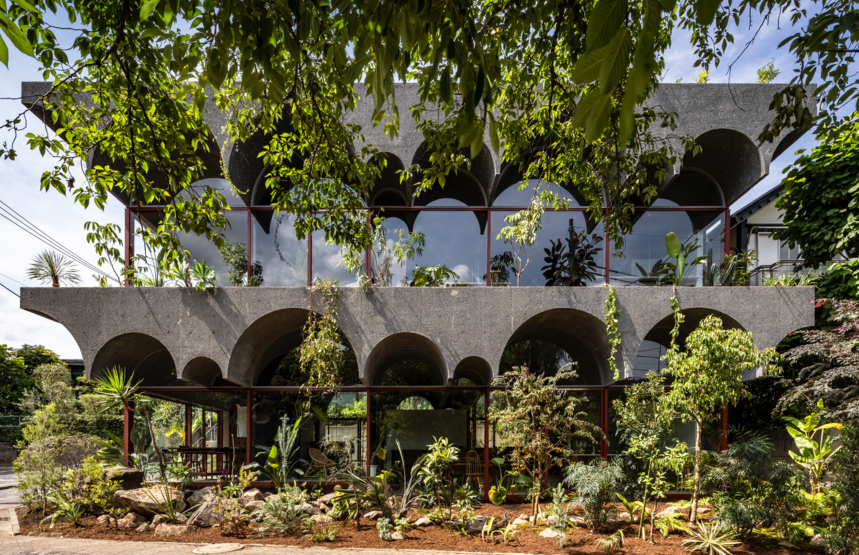 In the Tsuruoka House, the soil on the roof has a dense upper layer to retain most of the moisture needed for plant growth while the lower level is more permeable so as to facilitate drainage.
At the roof is a planter deep enough to grow trees alongside groundcover plants. The structure’s vaulted profiles not only provide a clear visual datum, but also contain soil within their hollow cores where channels allow rainwater to permeate naturally downwards to be drained away.
“[The building] aims to be a home for a variety of creatures, with a floor and roof resembling a large planter,” says Takeda. He envisioned that a small ‘forest’ will grow over the house, and the biomass of plants, birds, and insects will replace the mass of the construction.
An article in the scientific journal Nature stating that the mass of human-made objects now exceed that of all living biomass, had affected Takeda deeply, thus influencing these strategies. Via an email interview, he shared about another tome that has inspired him: Emma Marris’ ‘Rambunctious Garden: Saving Nature in a Post-Wild World.’
“The book argues that the global environment will not be stabilised if humans are eliminated, but rather that humans need to play an active role in regenerating the global environment,” highlights Takeda on the higher calling to his work. He had become an architect being influenced by his architect father. Born in Kanagawa Prefecture in 1982, he studied architecture at the University of East London before returning to Japan in 2007.
For a decade, Takeda worked at Kengo Kuma & Associates (KKAA), whose founder had led the design of famous buildings such as the V&A Dundee and the Japan National Stadium for the 2020 Summer Olympics. “One of the things I learned from Kengo Kuma is that he creates spaces whose concepts are easy for everyone to understand – from the children to the elderly,” shares Takeda, who struck out on his own in 2018.
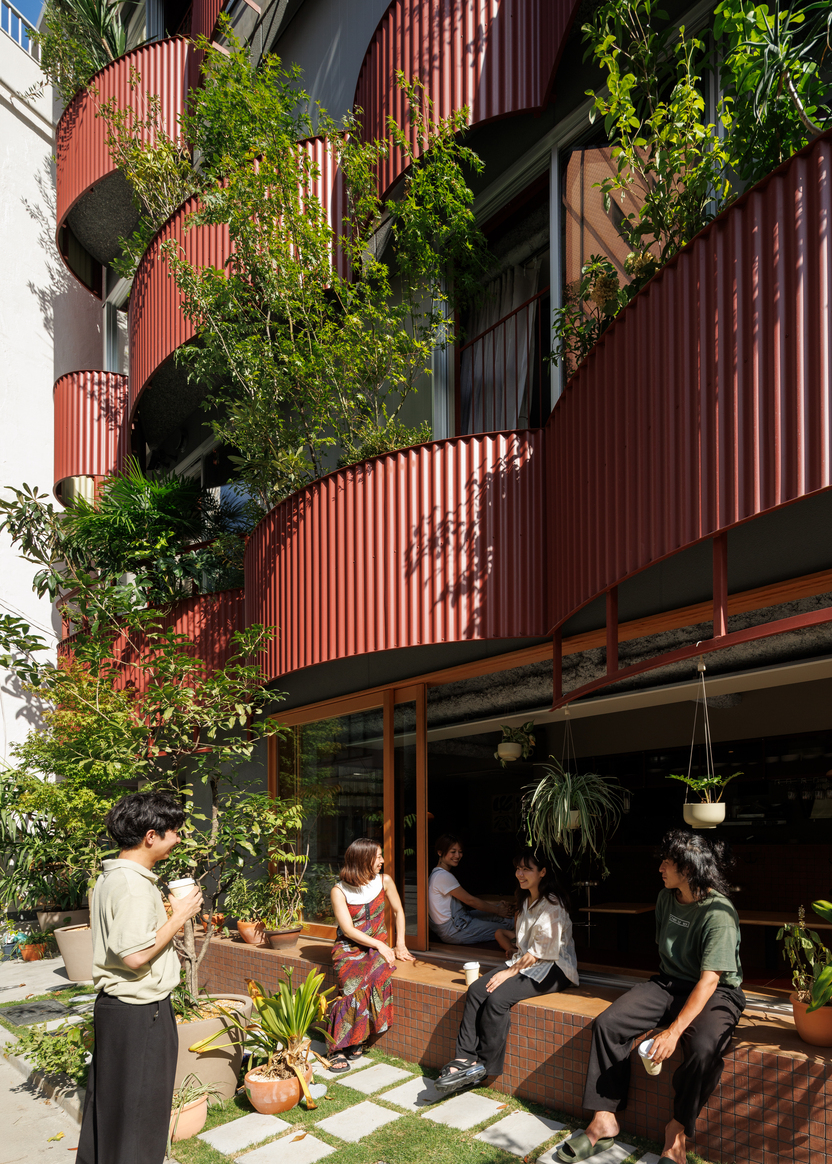 Soil Nihonbashi hotel
While now based in the metropolis of Tokyo, he often reminisces his idyllic childhood set in a bucolic environment. “The place where I was born and raised was surrounded by forest and was home to a diverse range of living creatures. But now that place has been transformed into a densely populated residential area and the forest has disappeared,” Takeda recalls.
This, as well as his preoccupation with the state of the Earth, has factored into his methodologies. “I aim to be an architect who designs not only for human life, but also for the plants and creatures that surround us,” he says, pointing out ideas like those found in the Tsuruoka House.
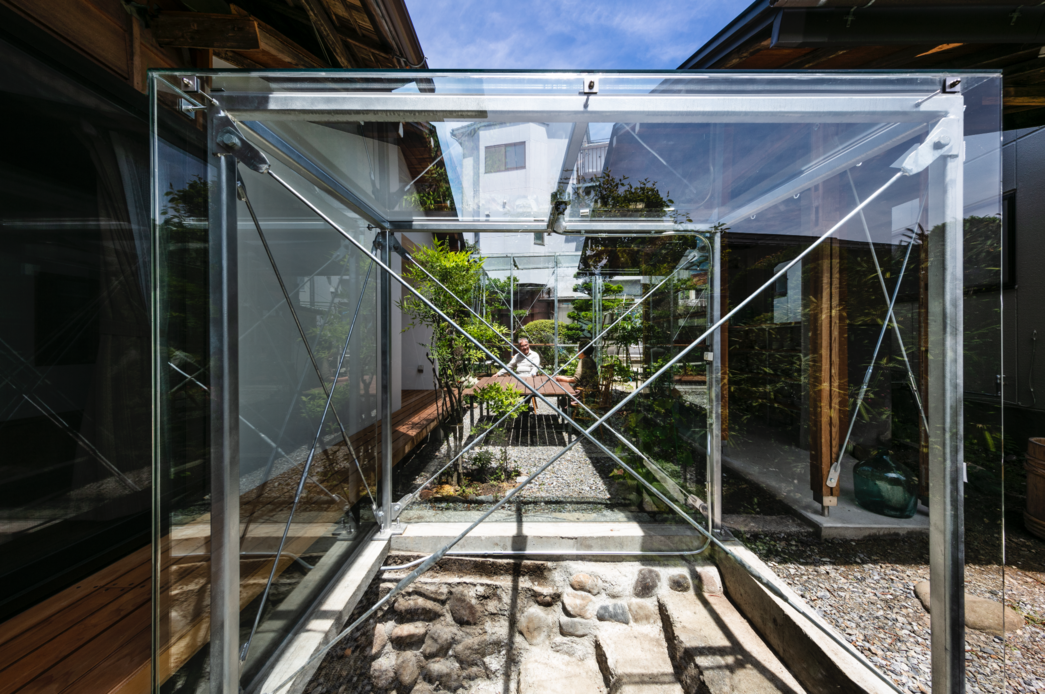 House with Six Annexes involved the renovation of a historic dwelling for an elderly couple.
Another example is the House with Six Annexes. In it, he found an unused, ancient underground cellar, shelter, and well. Discovering that the grotto-like space provided a constant room temperature all year round, Takeda decided to retain it, and built a glass enclosure above to bring in light. On ground level, he wove existing separate structures resulting from the dilapidation of the house into the new architecture.
In this way, he retained the history of the house’s ‘wilding’ rather than embarking on a tabula rasa approach. The inhabitants now live in a continuum – a “new ‘wild life’” – where the concept of architecture is not just about ‘buildings’ but encompass structure, conditions and elements from the most rudimentary of nature.
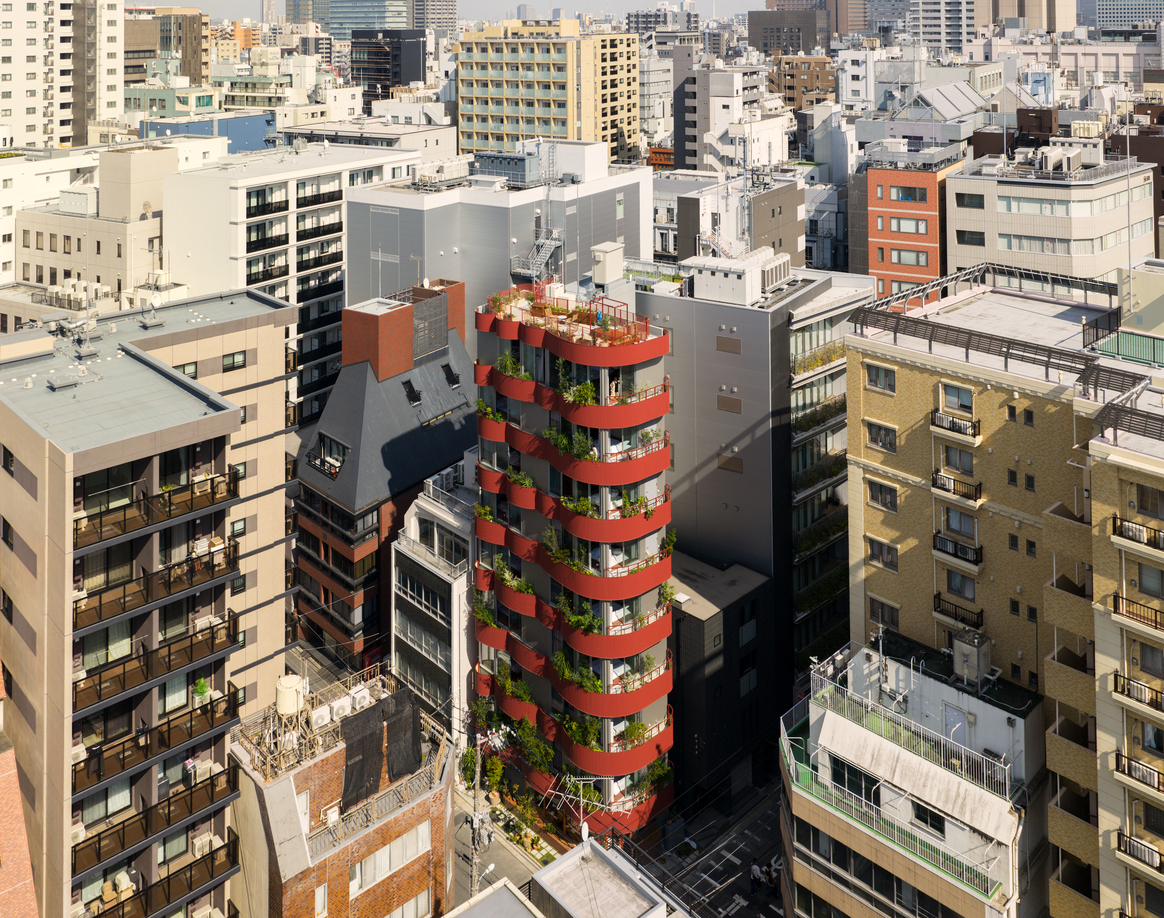 Soil Nihonbashi hotel
A recently completed project that embodies Takeda’s approach is Soil Nihonbashi. Opened on 1 September 2025, the 14-room boutique hotel by developer Staple Inc. has potted plants adorning the public spaces, inside the guestrooms and in balconies tracing the building’s perimeter. Here, greenery is a device that not only helps colour the greyness of an urban environment, but also a tool for emotional connection.
“Designing a hotel building is very difficult for an architect. This is because hotels tend to be buildings that have no connection to the local area, as local residents do not stay there. In this project, we asked local residents to donate potted plants and work together to create the hotel’s exterior, with the aim of creating a sense of attachment to the building,” explains Takeda.
These gestures are not esoteric, but simple, empirical and relatable. At the same time, they stem from a bigger picture that Takeda keeps in mind. “Architecture needs to be designed from the perspective of resources. Firstly, we need to know which forest the building materials come from and what kinds of creatures live in that forest,” contemplates the architect on his method of replacing the biomass erased with construction, one project at a time.
“We want to design a rich environment for both the creatures that live in the forest and the people who live in the city.”





 Back
Back