This special feature brings together three voices who are pushing past conventional boundaries in their own way. From reimagining what a lifestyle brand can represent, to redefining holistic health, and modernising a century-old family business for a global future, Nelson Yap, Dean Ahmad, and Alvin Choo share how going beyond limits is less about radical reinvention, and more about evolving with intention and clarity.

Dean Ahmad’s philosophy on health is shaped by lived experience. Growing up with asthma, he learned early on that movement was not just about fitness, but survival, resilience, and quality of life. As co-founder and CEO of UFIT, Ahmad has helped pioneer an integrated model of health and fitness in Singapore, one that treats individuals like athletes in their own lives. Grounded in science, movement, and long-term wellbeing, UFIT’s approach challenges the aesthetics-driven norms of the industry, redefining what it means to live capable and healthy over a lifetime.
You’ve spoken about how childhood asthma shaped your approach to movement and human performance. How did those early experiences influence your decision to pursue a career in health and fitness, and ultimately co-found UFIT?
I grew up with childhood asthma, so movement was never something I took for granted. I also never enjoyed video games or staying indoors and always felt most alive outdoors, so I threw myself into anything that allowed me to move – soccer, track and field, softball, and even BMX riding. If it kept me outside, I was in.
What began as a simple love for playing eventually became my way of taking control of my health. The more I moved, the stronger I became, and over time, found myself relying less on medication until I no longer needed it. That experience left a lasting impression. It showed me that movement is not just exercise – it’s medicine that has the power to change how you live.
This personal journey shaped how I thought about health and performance. It eventually led me into the fitness industry and later to co-found UFIT. Our early mission was simple: Help people move better and feel stronger. But the deeper purpose came from my own story. If movement could transform my life so profoundly, then we could create a place where it could do the same for others.
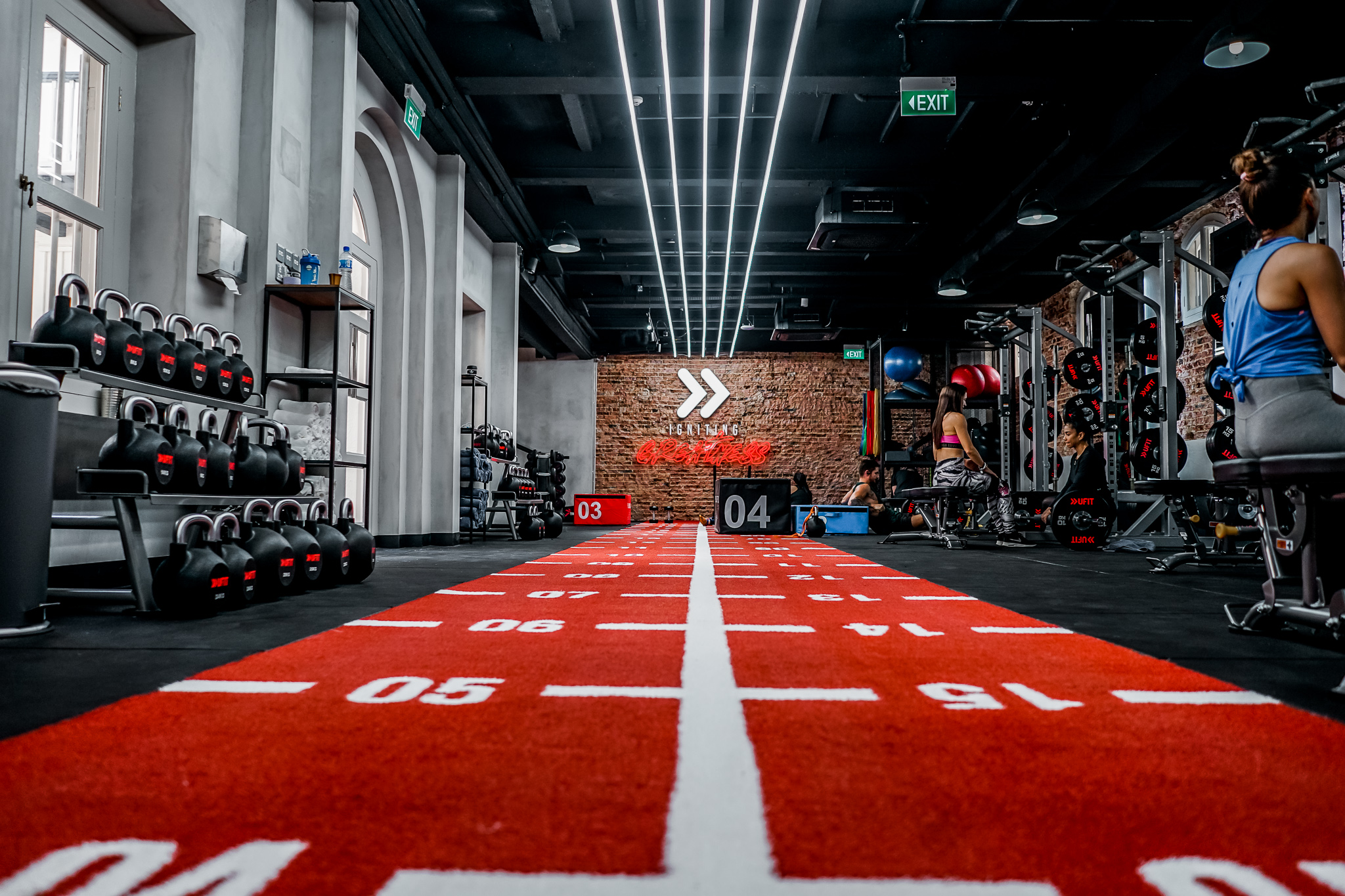
UFIT has grown from a boutique bootcamp to a leading integrated health and fitness provider. What were the key moments or decisions that allowed the company to move beyond training into holistic wellbeing?
UFIT began as a small bootcamp in Fort Canning Park. There was no master plan at the start. We had passion, strong coaching, and a community that grew quickly. Around that time, I was heavily influenced by strength and conditioning coaches in the United States. Their approach went beyond traditional gym training. They used movement-based programming, structured warm-ups, and specific protocols for youth athletes, adults, and older populations. Professional athletes worked within an ecosystem that included nutritionists, physiotherapists, strength coaches, and sports doctors who all collaborated. Seeing that level of integration showed me what was possible when movement, rehabilitation, and performance were connected rather than treated separately.
When one of our co-founders, James Forrester, relocated to Singapore, we discovered that we shared the same vision. As a former national rugby player, he understood the value of an integrated support team. Together we wanted to bring that model to everyday people in Singapore, where nothing like it existed at the time. In many ways, we pioneered this approach locally, and it laid the foundation for UFIT’s evolution.
The pivotal moment came when we brought physiotherapy and fitness coaching under one roof. Once our fitness coaches and physios started working side by side, clients progressed faster, stayed healthier, and formed long-term relationships with us. That integration eventually became the UFIT Circle of Care, which today remains the backbone of our holistic approach.
Fifteen years later, I believe we still lead the market in this space. The industry has expanded, but our integrated model and our commitment to treating people like athletes in their own lives continue to set us apart.
With initiatives like the Circle of Care programme, UFIT takes a multidisciplinary, personalised approach to health. How does this model redefine what people typically expect from a fitness or wellness provider?
Many people in Singapore still manage their health in separate parts. They might work with a fitness coach in one location, a physiotherapist somewhere else, follow nutrition advice online, and only consult a doctor when something goes wrong. They are trying their best, yet the system is not designed for these components to work together. Most end up coordinating their own health journey without the clarity or support they need. UFIT’s Circle of Care was created to change this experience entirely.
We built an environment where clients have access to one integrated team of health and fitness professionals who internally communicate and align behind one personalised plan. Instead of fragmented touchpoints, clients have one home base with multiple professionals collaborating on their behalf to provide the highest level of care.
Our goal was not only convenience, but also to raise the standard of care. When our team understands a client’s movement history, lifestyle demands, pain points, stress levels, and long-term goals, the approach becomes far more precise. Every pathway looks different because every individual is different. Some people need to rebuild foundational movement, others are pursuing performance, some require metabolic support, postpartum guidance, or a structured plan that fits a demanding career.
Assessments are also central to this model. They give clarity on a client’s starting point, enable us to track progress, and create accountability for both UFIT and the individual. This results in a collaborative journey where goals are set and achieved together.
(Related: Business Leaders Rewriting the Rules of Growth – Nelson Yap, Founder and CEO, Benjamin Barker)

Your philosophy emphasises movement, lifestyle, and science over aesthetics. How do you instil this mindset in your team and clients, and why do you think it resonates so strongly in today’s health-conscious world?
Technology and social media have reshaped how people view health and fitness. The general population today is far more informed about training, nutrition, and lifestyle habits than a decade ago. At the same time, the sheer volume of information makes it harder for people to separate evidence-based guidance from popular trends.
There is nothing wrong with an aesthetics-based training approach. For many people, wanting to look better is what motivates them to get started. At UFIT, we have always believed that aesthetics is a natural outcome of getting the fundamentals right. When someone moves well, improves their strength, improves their metabolic health, and remains injury-free, physical changes follow.
We are also seeing a growing desire for data-driven insights. Clients want to know how well they move, how their strength is improving, how their cardiovascular system responds, and how effectively they are recovering. They want to feel the real carryover effects of better movement, such as greater energy, fewer injuries, improved posture, and better resilience throughout their daily lives.
This is why we incorporate tools like the InBody analysis, VO2 Max testing, and VALD force plates. These assessments provide a deeper understanding of a client’s physiology and reveal improvements that are not always visible in the mirror. When combined with the rise of wearable devices that track sleep, recovery, and heart rate variability, people are beginning to view health in a more complete and informed way.
UFIT’s approach is grounded in the five pillars that shape lasting health: Movement, nutrition, recovery, community, and mindset. When clients feel stronger, move without pain, fuel their bodies well, recover effectively, and surround themselves with a supportive environment, they begin to understand their health data in context and see meaningful, measurable progress. These foundations help them build sustainable habits, which is why I believe this approach resonates so strongly today.

“When clients feel stronger, move without pain, fuel their bodies well, recover effectively, and surround themselves with a supportive environment, they begin to understand their health data in context and see meaningful, measurable progress.”
Looking ahead, what excites you most about the future of UFIT, whether in corporate wellness, client programmes, or expanding holistic health offerings?
The global interest in longevity is accelerating, guided by physicians and researchers who emphasise the foundational pillars of long-term health. Experts like Dr Peter Attia and Dr Luigi Fontana consistently highlight that lasting longevity begins with movement, strength, metabolic health, sleep, recovery, and meaningful relationships. Advanced interventions have their place, but only when these fundamentals are solid.
One of the most exciting shifts we’re seeing is the growing accessibility of diagnostics. VO2 Max testing, strength profiling, metabolic assessments, mobility screens, and biological age testing were once reserved for elite athletes. Today, they are available to the wider population, giving people unprecedented clarity about their health, fitness, and long-term risk factors. But data alone does not create change. What excites me most is UFIT’s unique position in helping people act on that data. Through the Circle of Care, our team of physiotherapists, podiatrists, nutritionists, health coaches, and fitness coaches translate diagnostics into structured, evidence-based pathways. These pathways come with measurable progress markers, consistent reassessment, and real accountability, ensuring insights become outcomes and testing becomes transformation. This is where diagnostics become meaningful – when they are paired with a system that drives long-term behavioural change.
Corporate wellness is another major area of growth. UFIT now supports more than ten thousand employees across Asia. We see daily how investing in employee wellbeing transforms workplace culture. Engagement rises, morale improves, and retention strengthens. When people feel supported and valued, the organisation becomes more cohesive and resilient.
Sports also continues to be a central part of UFIT’s identity. At our City Hall hub, we run the largest junior tennis league in Singapore, and that community grows every year. Sport brings people together, builds identity, and fosters long-term engagement, making it a powerful extension of our mission.
On a personal level, my commitment to movement shapes how I lead UFIT into its next chapter. I believe you cannot ask others to live a certain way if you are not willing to model it yourself. For me, this means staying active, strong, and capable for as long as possible. I want to remain healthy and present for my wife and children and continue participating fully in the moments that matter most.








 Back
Back