For two decades, Larry Peh has occupied a persistent position in Singapore’s creative landscape, working not at the extremes, but in the tension between them. His practice, shaped by a balance of rebellion and restraint, has never relied on volume. Instead, it has built its influence through observation, humour, and an instinctive understanding of how everyday life in Singapore is structured by rules, habits, and contradictions.
That sensibility, Peh says, owes as much to music as it does to design. “I think this way of working comes from the music I’ve always loved – especially Bossa Nova and Jazz. What draws me to it is how tension and relaxation can exist at the same time, without cancelling each other out.”
Growing up in Singapore sharpened that awareness early on. Life, as he experienced it, was full of oppositions: Strict regulations alongside quiet rebellions; order tempered by play. “Instead of choosing one side, I’ve always been interested in working right in the middle,” he says. It is a position that allows contrasts to reveal themselves without force, an idea he often returns to through a quote by Francis Bacon: “In nature things move violently to their place, and calmly in their place.”
(Related: Creative director Larry Peh embarks on a new creative journey with NORMAT)
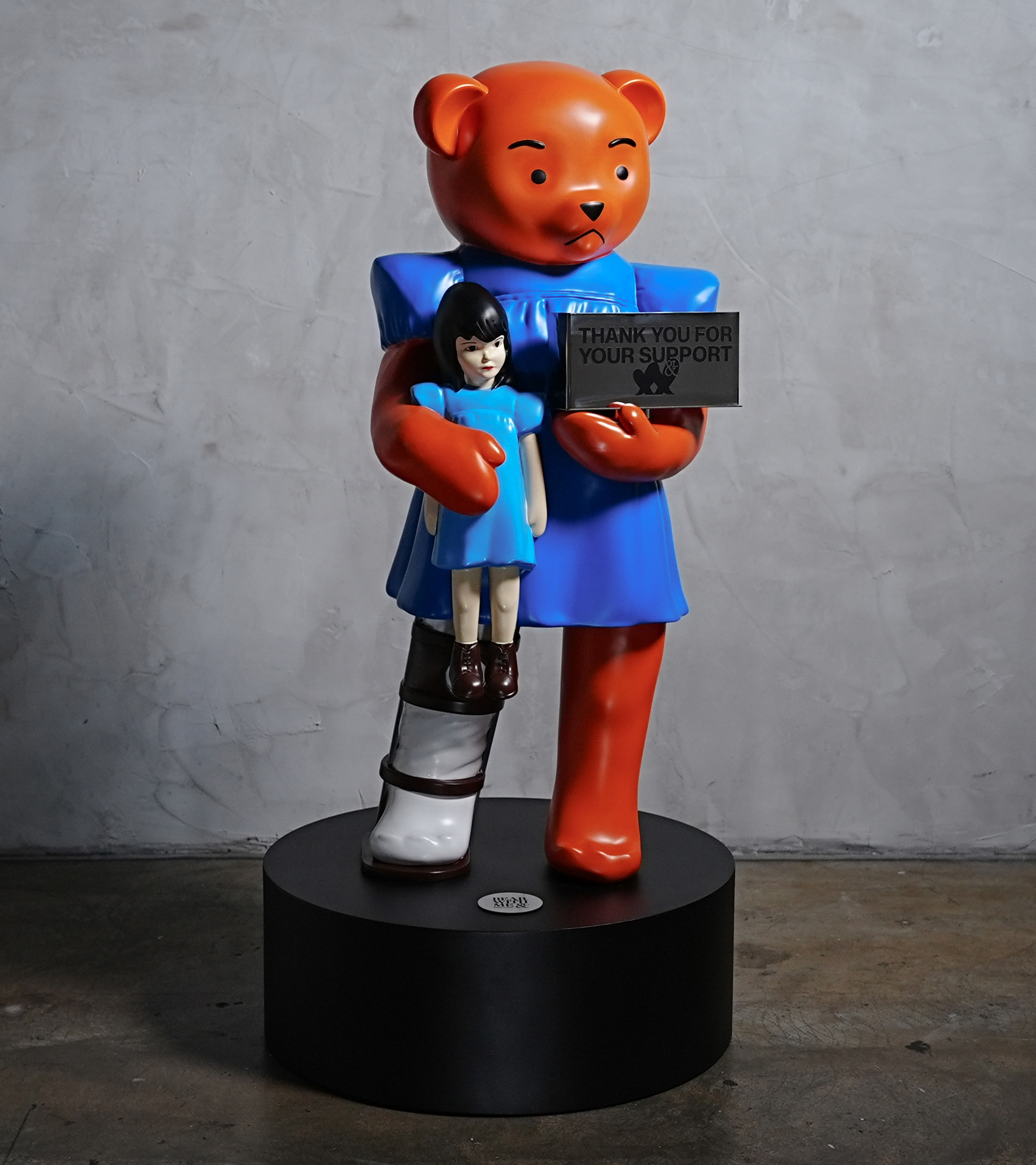 "Bear With Me"
That philosophy explains Peh’s long-standing interest in the overlooked details of everyday Singaporean life: Kopi cups, tissue packets, smoking-zone lines painted onto coffee shop floors. “Many vernacular objects are born out of knee-jerk reactions or pure necessity,” he explains. “They’re made to solve a problem quickly, not to be admired.”
What fascinates him is what happens after the urgency fades; when someone takes the time to look again. “When those objects are no longer urgent – when someone refines them slightly, or even just places them on a pedestal and says, ‘this is worth noticing’ – they take on another life,” he says. The reference to Marcel Duchamp is inevitable, but for Peh, the impulse is less academic than autobiographical. “These were the objects around me every day. Paying attention to them felt natural – and maybe inevitable.”
Humour has always been an integral part of that attention. It appears quietly in much of his work, often as an invitation rather than a punchline. Peh traces this instinct back to childhood. “I was a fairly quiet kid growing up,” he says. “I learnt early on that if I could make someone smile or laugh, they’d pay a little more attention.”
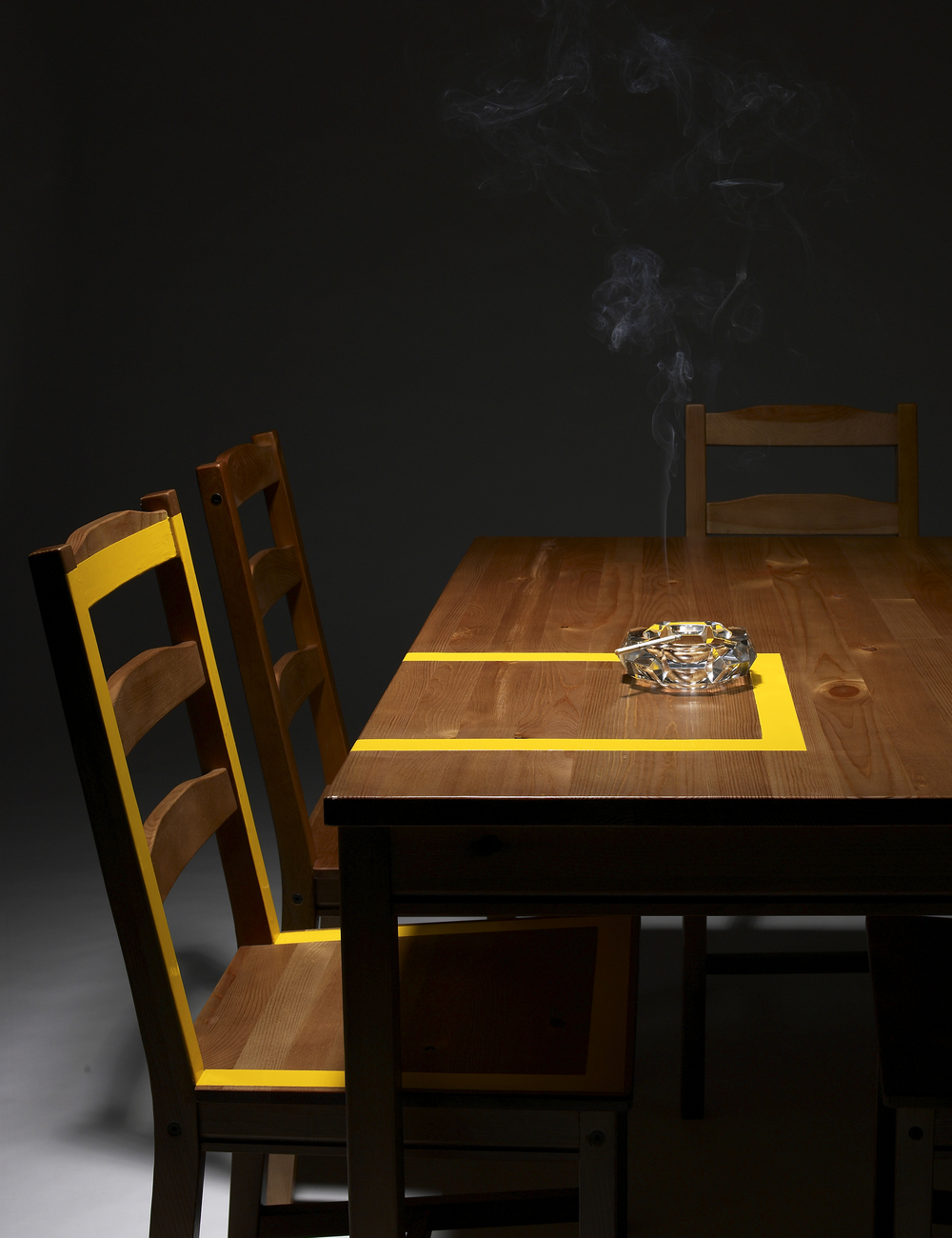 "Yellow Puff"
That humour also served as a kind of shield. Curious and cheeky by nature, he often found himself questioning rules that were not meant to be questioned. “At the time, that curiosity wasn’t really celebrated,” he recalls. “Looking back, I think humour just became my way of asking difficult questions without putting people on the defensive.”
Works such as Yellow Puff, which reflects on the absurd precision of smoking boundaries, operate in that space between critique and observation. On the surface, the work reads as a joke. But Peh is careful not to close the loop. “What’s important to me is that the work never closes the conversation,” he says. “Whether it feels ingenious or ridiculous really depends on who’s looking at it, and what they bring with them.”
That openness is deliberate. The judgement, he insists, does not come from the object alone. “I don’t try to answer that. I leave the decision with the viewer,” he says. The same ambiguity applies to interventions that complicate rather than resolve questions of morality or propriety. Has the work been improved, or compromised? Peh is content to let discomfort linger.
(Related: The world according to Khir Johari)
As &Larry, Peh’s branding and design consultancy, grew over the years, expanding into branding, fashion, product, and furniture design, there was one principle he was determined to protect. “You can afford to lose everything but the soul,” he says plainly. Long before purpose-led branding became an industry refrain, purpose was simply assumed. “What I’m more interested in is the soul that powers that purpose – the care, the intent, and the honesty behind the work.”
Looking back at earlier works today, Peh resists the suggestion that he was ever trying to be ahead of his time. “I’ve always worked on things that resonated – with me, with the people around me, and with the moment we were living in,” he says. If certain ideas feel newly relevant now, it is likely because the underlying issues remain unresolved. “The questions remain the same; only the mediums and surfaces evolve.”
Despite being widely credited with shaping how Singaporean contemporary design is understood, Peh remains largely unconcerned with influence. “I’ve always stayed true to my own language – one built on quiet observation rather than volume,” he says. Promotion was never the point. “I just focused on putting my mark on things and moving on.”
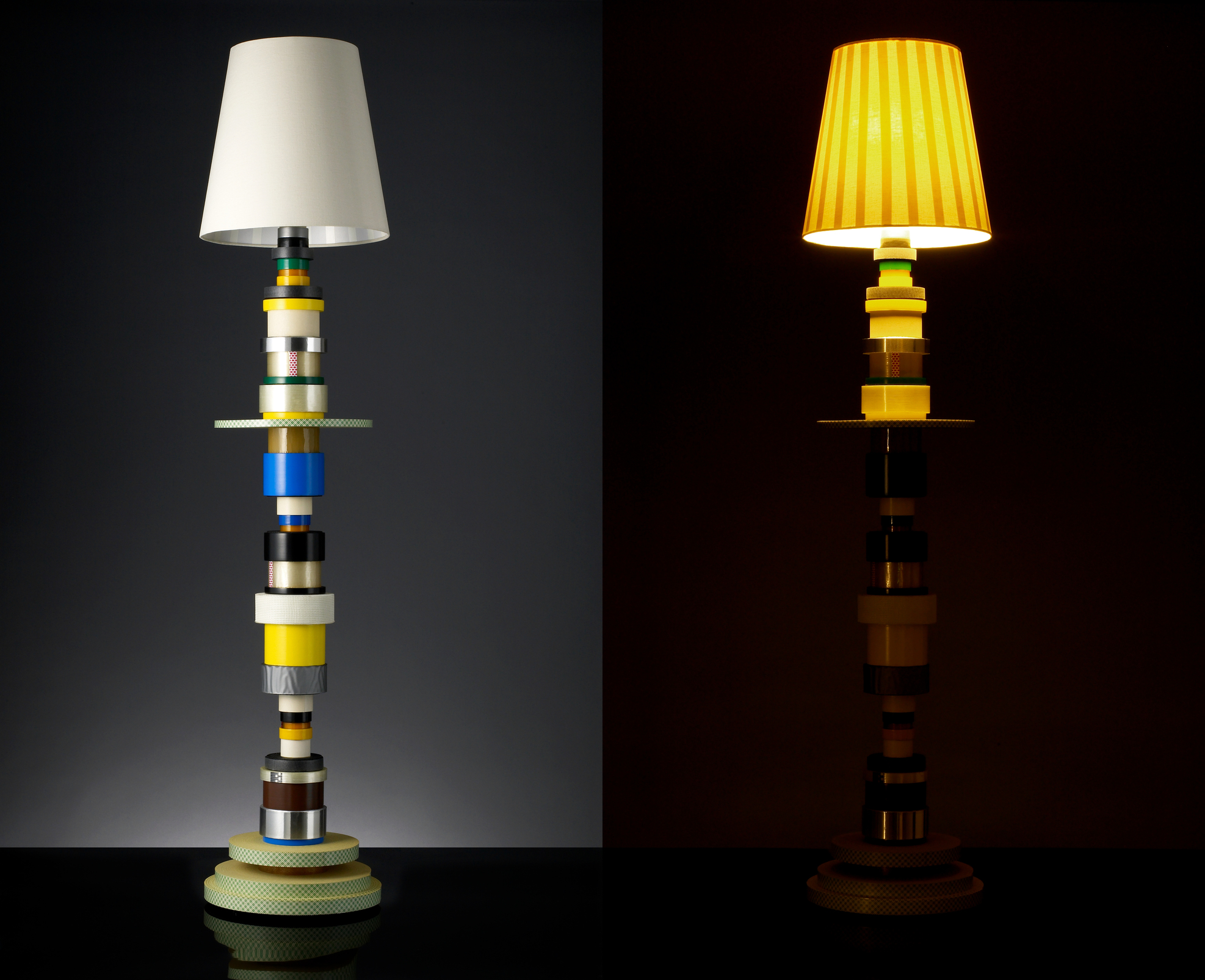 "Anything But Red"
If influence has followed, it has done so quietly. “I’ve honestly never thought of my work as influencing Singapore’s design culture,” he admits. “But if something I’ve done has resonated with someone, or found its place in our shared timeline, then I’m grateful.”
After twenty years, Peh is as reflective as he is forward-looking. He speaks openly about learning from younger designers today, particularly their confidence and openness. “That fearlessness is something I admire,” he reveals.
If there is one thing he hopes his own practice offers in return, it is not a style or a formula for success. It is a mindset he also shares with his children. “You can grow up, but don’t let the child in you grow up,” he says. Stay curious. Stay willing to ask questions that feel naïve or inconvenient.
It is a philosophy neatly summed up by a line from The Whole Earth Catalog that has stayed with him for years: Stay hungry. Stay foolish. “After 20 years, it still feels like the right way to move forward.”





 Back
Back