There’s a kind of effusive raconteur whose knack for storytelling is so strong that you can picture, in your mind’s eye, the exact lived experience they’re recounting.
As they regale you with tales of old Singapore, you can almost hear the clatter of trishaws, smell the aroma of satay being grilled over charcoal, and see streets teeming with life as people dart in and out of kopitiams, tailor shops, and goldsmiths.
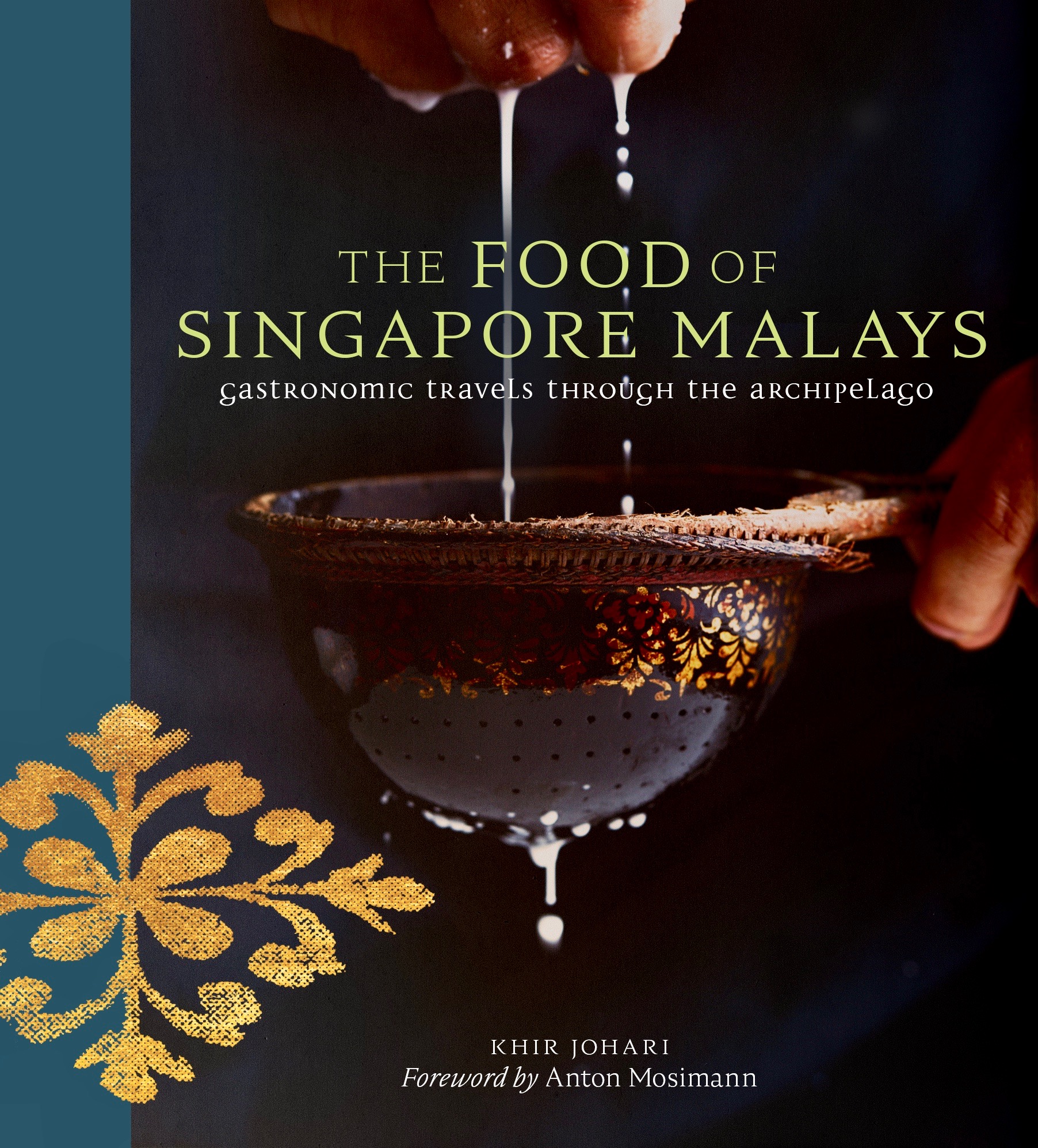
Khir Johari is one such yarn-spinner. We meet the author/historian/cultural custodian in a co-working space one afternoon, fresh from his win at the Gourmand Cookbook Awards 2025 held in Riyadh, Saudi Arabia. There, his epic tome, The Food of Singapore Malays: Gastronomic Travels Through the Archipelago (2021) clinched the Best of All distinction at the awards.
He greets us exuberantly. It’s not the book’s first award, though; earlier, it picked up the 2024 NUS Singapore History Prize and 2022 Singapore Book Awards – Book of the Year, among others. But this one was different.
“It was like attending the Oscars of cookbooks,” he shared enthusiastically. “It was so inspiring [being there] – I met so many wonderful authors, printers and publishers.” Even better, Johari’s book was personally selected – out of thousands of cookbooks published annually – by the President and Founder of the awards himself, Édouard Cointreau.
“The President has been doing this for more than 30 years. He reads every cookbook there is! I was surprised that he reached out to me,” Johari explained. It’s a clear indication of the book’s depth, quality, and impact on culinary scholarship. And, given the volatile geopolitical times we live in today, a pleasantly reassuring alternate reality.
“What the book is attempting to do is to look beyond geopolitical boundaries… [showcasing how] food transcends modern state boundaries,” Johari added. “It must have been a consideration for Mr. Cointreau, seeing what this book addresses.”
(Related: What's in My Portfolio – Khir Johari)
Another feather in Johari’s cap: The fact that the book’s first review didn’t come from a local source, but from a Professor of Anthropology in a German university, who wrote that the book was what the Baltic states should be referencing. Whether Estonian, Polish, or Russian, the Professor maintained, the Baltics share the same body of water, the same climate, and the knowledge of what to do with cabbage in spring to prepare for winter.
A mammoth project 11 years in the making, Johari’s magnum opus is a love letter to the people and culture of Nusantara, or the Malay archipelago. This encompasses the Austronesian islands of maritime Southeast Asia: Indonesia, Malaysia, Singapore, Brunei, East Timor, Philippines, and Southern Thailand.
Far from being just a cookbook, Johari showcased time-honoured recipes as living artefacts of a civilisation shaped by oceans, empires, and endlessly inventive chefs. Johari acknowledges that the book’s high profile has placed Nusantaran cuisine on a pedestal; with this, he hopes that it paves the way for increased global recognition, the same way that Oaxacan cuisine has tempted curious palettes in recent years.
- A LIFE LESS ORDINARY
- AN APPRECIATION OF ARTISANSHIP
A Life Less Ordinary
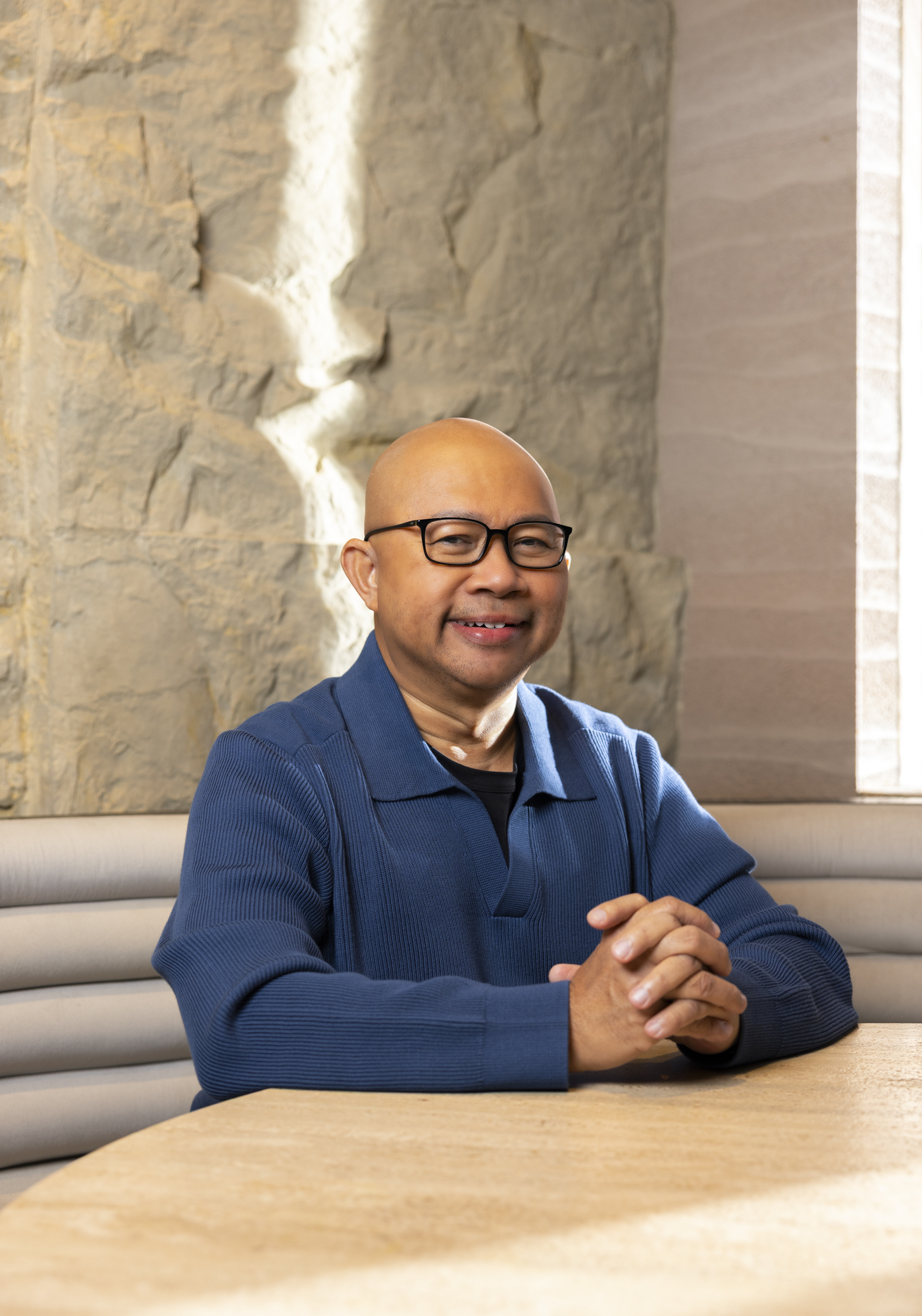 Collared sweater by COS
Growing up in Gedung Kuning – Yellow Palace – in Kampung Gelam left an indelible mark on the young Johari. His great-grandfather, Haji Yusoff, was a prominent businessman and community leader, presiding over four generations of the family under one roof.
“I remember as a nine-year-old kid, I had to write a composition. It could be about your favourite pet, your aquarium, your home etc. I decided to write about my home. We had 43 people living under one roof,” shared Johari.
The elder Yusoff bore six daughters; to keep the entire clan well fed and running like a well-oiled machine. The home had four kitchens, with two sisters to a kitchen and a fourth reserved for heavy duty prep work, such as coconut-grating and sambal-grinding.
Johari’s great-grandmother, the family matriarch, was also a cornerstone of the community. “A constant stream” of newlywed couples would routinely drop in to pay their respects; each of those occasions meant an opportunity to feast.
“We had this beautiful oak dining table that my great-grandfather ordered from England – a tok panjang [“long table”] – and on it were all sorts of tarts and puddings,” Johari reminisced. “We also had a daily teatime, with a menu that ranged from pengat pisang and breadfruit fritters one day, to creme caramel and bubur som som on other days.”
To all intents and purposes, it was a little like Downton Abbey.
Gedung Kuning’s back door opened onto Kandahar Street, one of the neighbourhood’s most important arteries. “The whole stretch used to be lined with Indian street stall vendors. As you step out, you can hear someone speaking Telugu, Tamil, Marathi, or Hindi. You want chapati? You can get chapati. You want fried pigeon or yogurt in a terracotta pot? You can get those too. It was just so colourful.”
Johari is grateful for the privilege of growing up in such an environment. “It wasn’t just about our family’s own dishes – it was the way we exchanged recipes with the wider Malay-Muslim community around us. There was always this beautiful cross-pollination of techniques, flavours, and stories. Over the years, our family accumulated an extraordinary collection of recipes. I feel very fortunate to have had that experience.”
(Related: Chin Wei Jia on healthcare with heart)
- A LIFE LESS ORDINARY
- AN APPRECIATION OF ARTISANSHIP
An Appreciation of Artisanship
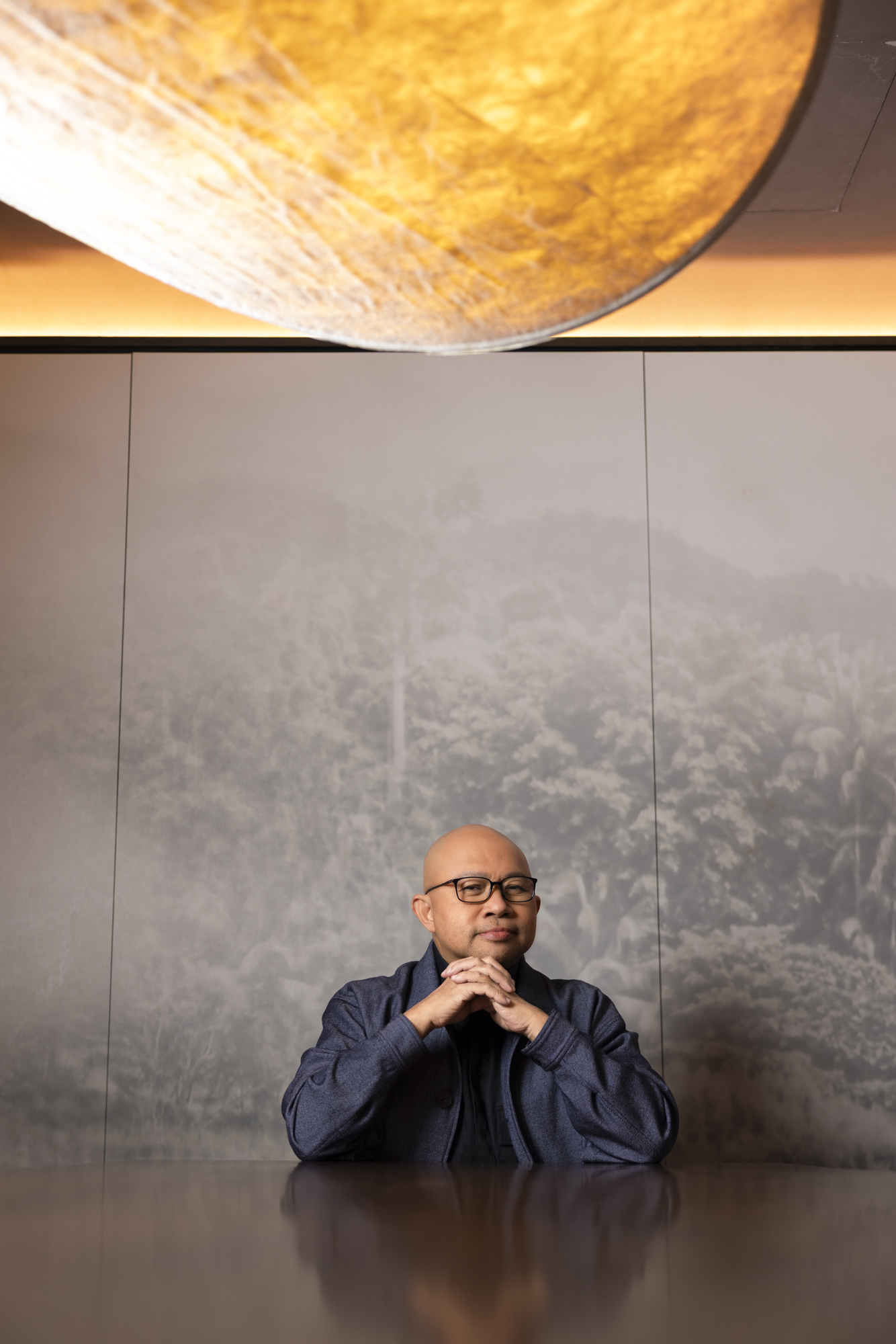 Shirt and jacket by IN GOOD COMPANY
Almost as if on cue, Johari, ever the showman, whips out two containers of homemade kueh, one savoury – kueh bakar berluak – and one sweet – talam kueh pulut hitam. Both, naturally, are divine.
Asked if there was one underrated aspect of Nusantaran cuisine that he would love to showcase, or that more people would appreciate, Johari mentions artisanship.
“What I want people to recognise is the extraordinary artisanship of Malay cuisine. There’s so much thought, technique, and legacy embedded in it. It’s the result of a long, continuous fermentation of a very old and very diverse culture – one shaped by constant movement, exchange, and outward-looking curiosity because the Malay world has always been maritime.
“In an outward-looking world, there’s bound to be a lot of exchanges. The Malay world has always been good at absorbing new influences, experimenting with them, and making them its own. I hope people come to appreciate just how open and dynamic this culinary space is – every bit as exciting as the Mediterranean, if not more.”
With a voice that dances with passion and eyes that sparkle like they’re time-travelling as they speak, Johari carries the past like a treasured heirloom. His intention isn’t to archive it, but to bring it roaring back to life in full, glorious colour.







 Back
Back