CHERIN TAN
Creative Director & Founder, LAANK
What does “passion” and the “pursuit of excellence” mean to you, and how has your definition of it evolved throughout your career and personal journey?
Passion is the willingness to keep caring about what you do and why; even when there is no external recognition or applause for it. It is the constant itch of curiosity that makes you question what is already there, paired with the compulsive repetition to keep pursuing something until it feels right.
Excellence is what comes from staying with that process. I used to think it was about perfection. Today, I think it has more to do with how far you are willing to pursue an idea or a task. To make, undo, and remake, not because anyone else will notice the difference, but because you do.
I don’t know if excellence is something you ever arrive at. The benchmark keeps moving as you do. What felt like your best work five years ago may not satisfy you today, and I think that is a good thing.
Grand Seiko’s pursuit of excellence is rooted in attention to detail, where even the smallest elements contribute to the whole. What are the details that you refuse to compromise on, and why are they important to achieving excellence?
The things I refuse to compromise on exist at both ends of the scale – from details that nobody consciously notices, to the bigger decisions that determine whether a design works at all.
In my work, it exists as a proportion being slightly off; how seamlessly two materials meet; the finishing on the underside of a table; the weight of a chair; the way light falls across a surface. These things may seem insignificant on their own, but collectively they determine how something feels.
Attention to detail also exists in the bigger things: Whether the design aligns with the client’s objectives, whether it functions the way it was intended to, and whether it is designed to be hardy enough to live beyond the photograph.
Your industry typically requires a willingness to challenge convention and find better ways of doing things. How do you approach design and innovation in your own work, and how have they shaped your pursuit of excellence?
I don’t think innovation necessarily means inventing something that has never existed before. Sometimes it is simply refusing to accept that something has to be done a certain way just because that is how it has always been done.
In my work, I tend to start by questioning the assumptions around a brief. Why should every office look like our idea of an office? Why does a particular material have to be used in the way it was intended? Why can’t something old, discarded, or ordinary be given an entirely different purpose?
But I also don’t believe in being different for the sake of being different. Innovation has to earn its place. It has to serve a purpose – whether that is answering the brief, functioning better, or simply making more sense to the people who will eventually inhabit the space.
I think this has shaped my pursuit of excellence because it keeps me from relying too heavily on what I already know. Experience gives you a library of answers, which is useful, but it can also make you complacent. The challenge is to keep the experience while retaining the curiosity of someone who doesn’t assume they already know the answer.
Grand Seiko’s approach to watchmaking is guided by pillars such as precision, craftsmanship, aesthetics, refinement, and innovation. Which of these resonates most strongly with you, and why?
Refinement resonates with me most because I think it is where all the other qualities come together.
Something can be incredibly precise, but lacks character. It can be beautifully crafted, but poorly proportioned. It can be innovative, but completely impractical.
Refinement, to me, is the judgement required to balance all of those things without allowing one to overpower the other.
I see refinement less as a particular aesthetic and more as the ability to make good decisions between competing demands. It is knowing what to prioritise, where to compromise and, equally, where not to.
Looking at your own pursuit of excellence, what is one lesson or principle that you believe applies to anyone who is committed to mastering their craft?
Stay teachable. The longer you practise a craft, the easier it is to become attached to what you know and what has worked for you before. Experience gives you confidence, but I think mastery requires you to remain open to the possibility that there is still a better way; and having humility and embracing the fact that the person who shows it to you sometimes may have far less experience than you do.






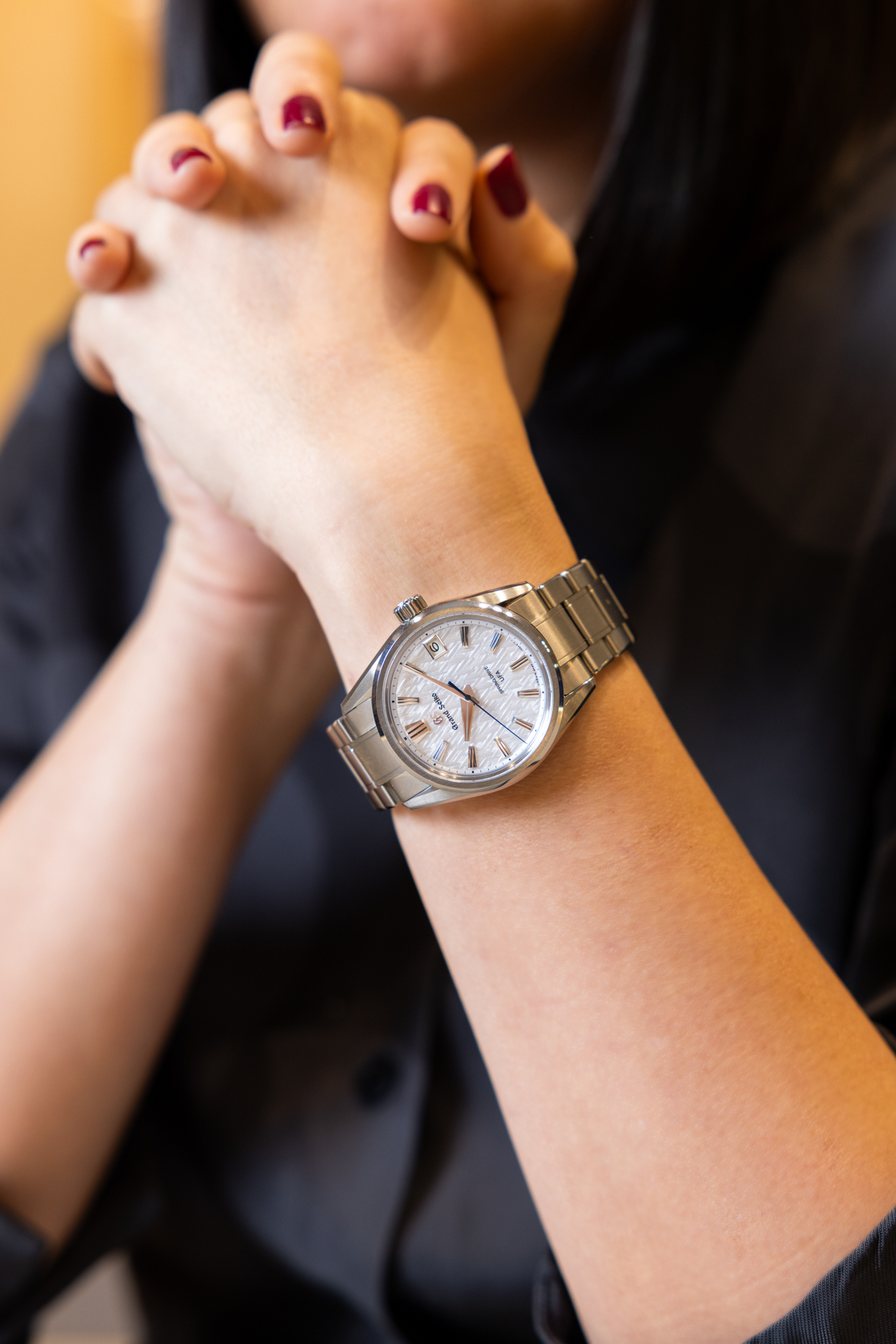 Cherin is wearing the SLGB003 (Ice Forest, U.F.A)



 Back
Back