For something that has kept watches ticking properly for 350 years, the hairspring has been somewhat resistant to change since Christiaan Huygen first coiled one up in 1675. His spiral regulated the balance wheel and transformed timekeeping accuracy, yet genuine breakthroughs since have been rare. But on the anniversary of that invention, Tag Heuer has unveiled its most ambitious update yet: The TH-Carbonspring Oscillator. Neither metal nor silicon, this new hairspring is forged entirely from carbon. And this could be a game-changer.
The first hairsprings were drawn from steel, one of the few materials pliable enough at the time to be coaxed into a fine wire. But steel came with weaknesses: It warped under shocks, faltered with temperature shifts, and succumbed to magnetism. It wasn’t until the 1930s that Swiss engineer Dr. Reinhard Straumann offered a solution with his patented Nivarox hairspring — a nickel-iron alloy that did a decent job shrugging off some of those influences. Nearly a century later, Nivarox (now owned by Swatch Group) is still the industry’s workhorse hairspring.
Naturally, horology’s overachievers weren’t content to stop there. In 2002, the silicon hairspring made its debut, offering clear advantages over Nivarox: Superior resistance to magnetism, ultrap70 precise manufacturing, lighter weight, immunity to corrosion, and consistency in production. But there was a catch — it was patented, restricting its use to Rolex, Patek Philippe, the Swatch Group’s stable of brands, and Ulysse Nardin. It was also worryingly brittle.
So, what was an outsider like Tag Heuer to do? Simple: Ignore the paved road and invent its own alternative. The brand turned to carbon — a material that’s not only (also) completely antimagnetic, but lighter and less fragile than silicon. In 2019, it unveiled its first carbon hairspring in the Carrera Heuer 02T Nanograph Tourbillon and the Autavia Isograph Chronometer. Both, however, ran into technical and manufacturing snags, and soon disappeared from the market not long after they arrived.
But that didn’t stop Tag Heuer from trying again. And this year, it seems to have finally cracked the code. The TH-Carbonspring is tough enough to withstand shocks of up to 5,000g — a force that would bend metal hairsprings and shatter silicon ones. Its featherlight build also reduces inertia, giving the balance wheel greater stability and more consistent rate performance across positions. The brand is so confident in its creation that it comes with a five-year guarantee.
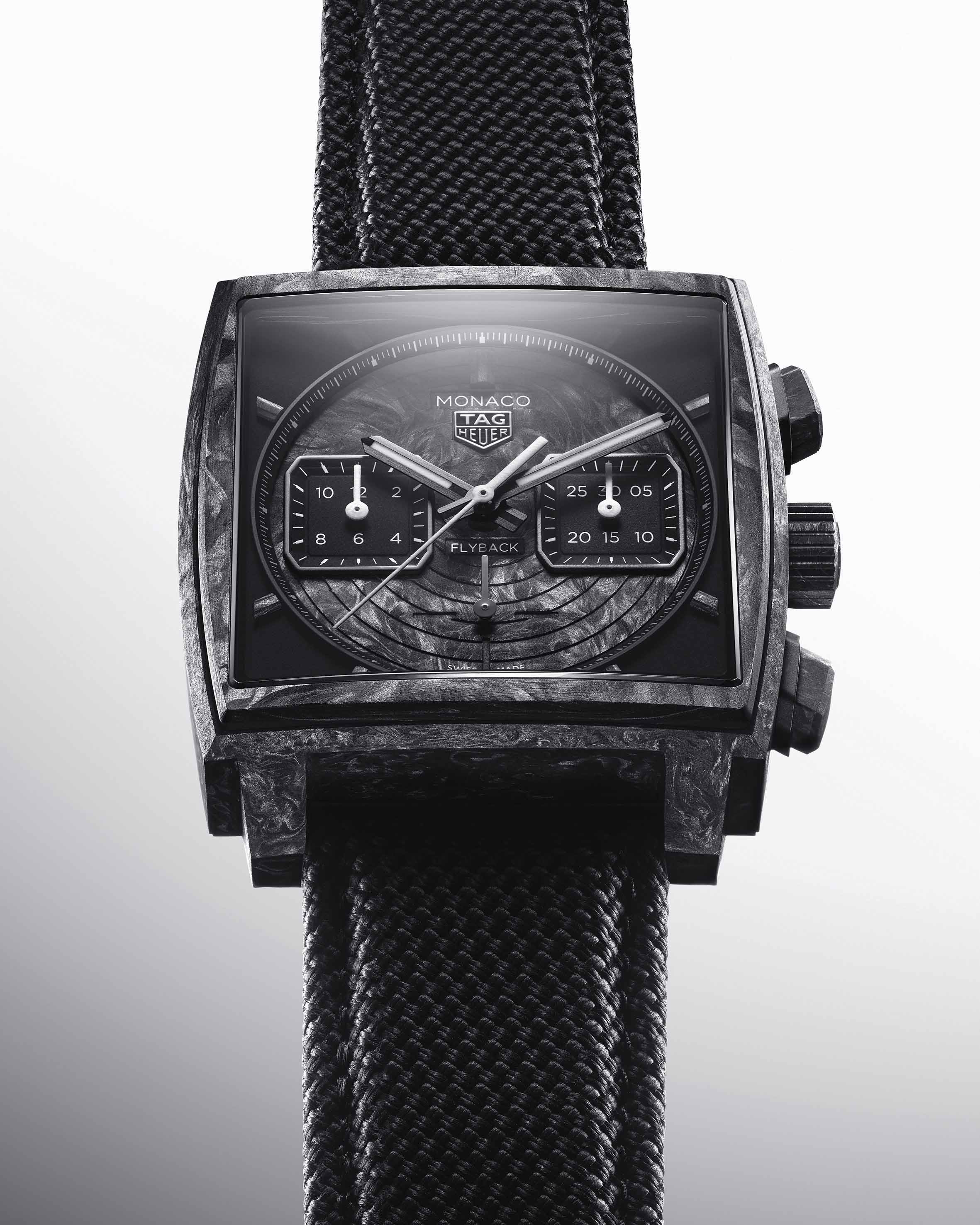
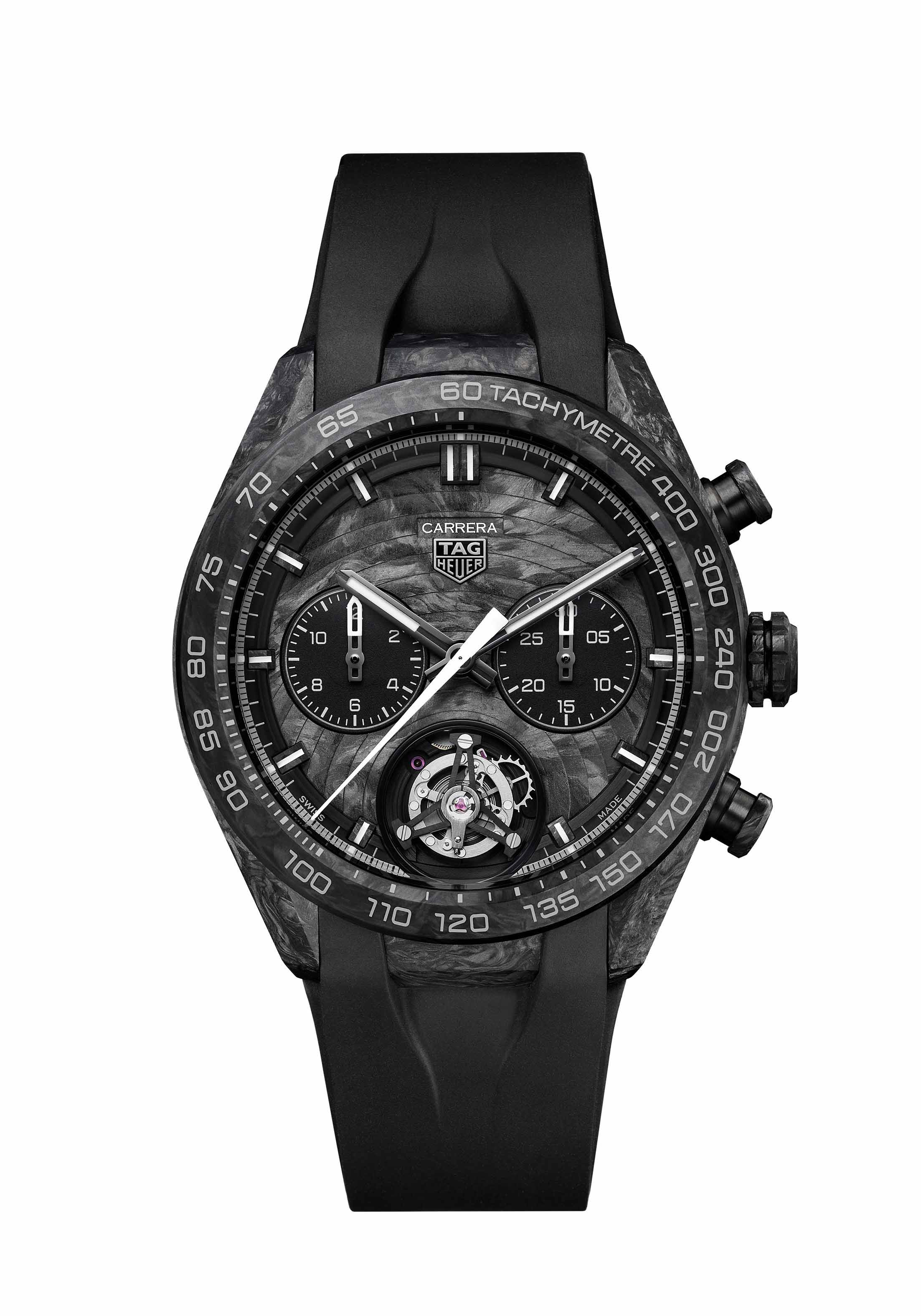
To mark the breakthrough, Tag Heuer is once again pairing its innovation with two headliners: the Monaco Flyback Chronograph TH-Carbonspring and the Carrera Chronograph Tourbillon Extreme Sport TH-Carbonspring, each limited to 50 numbered pieces. Both come clad in carbon cases, pushers, and crowns — a fitting uniform for the carbon revolution inside — and feature engraved dials with spiralling motifs that nod to the hairspring’s heartbeat. The Monaco runs on the Calibre TH20- 60 with 80 hours of power reserve, while the Carrera packs the tourbillon-equipped TH20-61 with a column wheel and 65 hours of autonomy. Unsurprisingly, both are COSC-certified.
With four patents shielding it from rivals, carbon hairsprings won’t be industry standard for some time. So, until then, Tag Heuer will hold the advantage of delivering watches tough enough to handle everyday knocks without compromising on timekeeping performance. It may be a niche achievement now, but this is the kind of innovation that shifts the baseline for what mechanical watches can do.
For more information, click here.









 Back
Back