In the fiercely competitive bar industry – one that is fueled by ranked lists and named awards – two founders of Singapore Cocktail Crossover (SGCX) independently reached for the same phrase to describe what they were building: A rising tide that raises all ships. That both Peter Chua and Caryn Cheah arrived there without comparing notes is probably the most unguarded thing either of them says about it.
SGCX ran this June across six days – four nights of activations through Singapore’s heritage bar neighbourhoods, culminating in a two-day weekend festival at METT Singapore – with more than 15 international bars from eight countries participating. The lineup included the current world number one Bar Leone from Hong Kong, Barcelona’s Paradiso, Seoul’s Zest, and New York’s Sip & Guzzle, who was most recently crowned The Best Bar in North America 2026. The international pull was impressive. The more instructive story, however, is what produced the impulse to pull it off at all.
The Singapore Cocktail Festival is gone. Bar Convent Singapore – the city’s trade-facing industry convention – has been discontinued by its parent company. These annual calendar moments that once anchored Singapore’s bar industry no longer exist. Yet, the founding quartet behind SGCX – Chua, Cheah, Vijay Mudaliar of Native, and Henry Stonham, formerly project lead of Bar Convent Singapore – are reluctant to frame what they built as a rescue operation. Chua, whose Night Hawk has logged multiple 50 Best placements – and spent the past decade shaping Singapore’s bar culture as both operator and educator – does not soften the conditions. “The industry has been dealt blows from external and internal factors that made running a bar less attractive than it was before,” he reveals.
The four founders arrived from different positions in the industry, and that breadth is deliberate. Mudaliar built Native into one of Asia’s most research-driven bars – an operation that ferments its own ingredients and changes its menu annually, remaining on Asia’s 50 Best by being conceptually restless rather than trend-chasing. Stonham spent years building Bar Convent Singapore’s institutional infrastructure as its project lead. Cheah’s company Lil Big spans Bacardi Legacy, Diageo World Class, and the Amber Lounge series in Monaco and Abu Dhabi, all events at the apex of luxury production.
What they designed together was an intentional departure from the formats that came before. Cheah is precise about why: “B2B trade shows and mass-consumer alcohol festivals belong to a different era of Singapore’s growth. Today’s consumers and brands reject cookie-cutter events with high-overhead setups.” The model SGCX replaced those with is organised around four pillars — drinks, music, food, and style — and is not governed by an external event corporation whose primary metric boiled down to ticket volume.
And that shift in ownership is not cosmetic. “The sponsors aren’t dictating the culture,” Cheah says. “They are funding a vision crafted by the operators themselves. The commercial backing is the fuel, but the community is the driver.” One could be skeptical of that framing, but the counter-argument she anticipates and addresses directly is disarming: “Without commerce, ‘community’ is just a group of people commiserating.”
(Related: Building Belonging – How Brand New Land is redefining a home's value)
In Stonham’s corner, having watched Bar Convent Singapore’s institutional model run its course, he does not frame SGCX as a replacement so much as a recalibration. “As cocktail markets and cities around the region have developed,” he observes, “what an event needs to look like depends on where its market actually is in that development.” It is an accurate diagnosis of how Singapore’s creative industries tend to behave under pressure – not by defending inherited formats, but by dismantling them and rebuilding for the next stage.
His organising principles for SGCX follow from that logic: A guaranteed annual convergence point; structural backbone, without which any festival risks being, in his words, “a good party but not much else underneath”; and timing – reading where the market is heading, not where it has been.
That last principle is where Cheah’s argument picks up and sharpens. Global bar rankings require academy voters to have physically visited a venue within 18 months to cast a ballot – meaning visibility tracks travel patterns as much as talent. Cities that keep the world moving through them hold their ground on the lists, and cities that don’t, drift. “You don’t wait for the world to buy a plane ticket,” she says. “You build an epicentre that forces global talent, media, and voters to gather.”
The same counter-hierarchical instinct shapes the inaugural SGCX Bar Awards – a peer-voted recognition programme guided by three academy chairs and more than 65 locally-based voters from industry, media, and consumer regulars. Operating separately from the public festival programme, it is structured to celebrate rather than rank: Positions six to thirty announced without hierarchy, the top five revealed as a collective. “Singapore’s strength lies in its collective density of talent, not a singular peak,” Cheah says. “It shifts the energy from fighting each other for a fraction of a rank to collectively defending and expanding our territory.”
The first edition of SGCX produced what first editions typically do: Genuine enthusiasm from the industry, variable execution across different nights and venues, and a set of operational findings that only live programming reveals. The appetite within the trade to return for a second edition is, by most accounts, present. What remains unresolved is whether the commercial architecture – sponsorship returns, ticket revenue, brand ROI – can sustain the platform once the inaugural momentum settles.
Cheah has almost certainly already run that calculation. But until then, the tide still needs to prove it can hold.




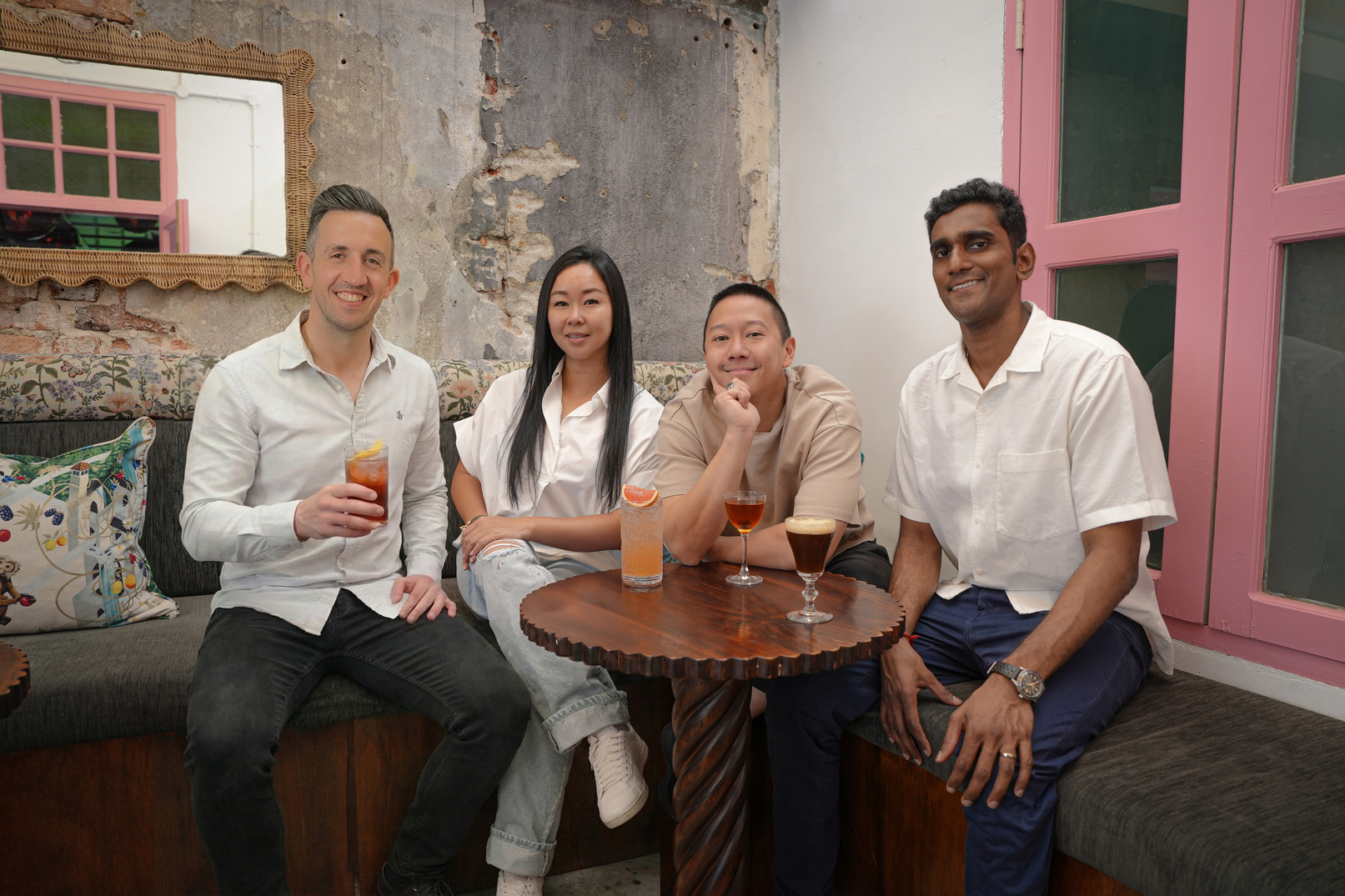 L-R: Henry Stonham, Caryn Cheah, Peter Chua, Vijay Mudaliar




 Back
Back