Tay Su-Lyn approaches leadership with a deep sense of stewardship. As Creative Director at Violet Oon Singapore, she operates at the intersection of heritage and modernity, carrying forward a legacy built on culture, craft, and storytelling. Her role is not simply to preserve what has come before, but to translate it with care and clarity for a new generation.
You oversee the creative direction of the Violet Oon brand, which carries deep cultural and culinary heritage. How do you balance preservation with evolution as a creative leader?
I see preservation and evolution as going hand in hand. My deep respect for my mother’s body of work and what it represents for our culture and traditions is very meaningful to me. Her lifelong dedication to curating and preserving techniques, flavours, and stories is something I feel a strong responsibility to continue, so that future generations can experience these flavours and understand the heritage behind them.
From that place comes a natural appreciation for the elements of our culture – the Peranakan tiles, batik, the way food is served, and the traditions of Peranakan hospitality. Over the years, we have amassed a collection of hundreds of Peranakan tiles salvaged from old shophouses that were being torn down. These tiles have since found a new home adorning the walls of our restaurants. They are meaningful fragments of history, woven into the spaces our guests experience.
As the brand grows, these same foundations allow us to express the culture in different ways without losing its essence. All of these come into play when we create the environments our guests step into. The intention is always to honour and translate the DNA of the culture into a living brand, bringing together the vibrancy, warmth, and richness of these elements in a way that feels respectful, relevant, and alive.
(Related: Empowering Women, Empowering Futures – Renee Lim, LFA Studio)
Working within a legacy brand comes with expectations. How do you establish your own voice while respecting what came before?
Working within a legacy naturally comes with expectations, and I’ve always been very mindful of that. For me, establishing my own voice has been about understanding the legacy and culture deeply, and carrying it forward with care. My mother’s work sets a very strong foundation, and I see my role as building on it.
My voice comes through in how the brand is expressed today: Creatively, aesthetically, and experientially. This shows up in the spaces we create, the details we choose, the way stories are told, and how guests experience the food and hospitality. It’s about translating her values and standards into a contemporary context, while staying true to the essence of what she has built, and allowing it to continue living and evolving in thoughtful ways.
Have there been moments where gender shaped how your ideas or authority were received? How did those experiences influence the way you lead today?
My first job out of school was starting my own clothing line based out of Los Angeles, which I ran for 13 years. After selling that business, I joined my family to build Violet Oon Singapore. In both spaces, I was able to focus on the work itself, and gender hasn’t been a defining factor in how my ideas or authority were received.
Growing up, I often saw my mother as the only woman in a field of male chefs, and I never observed her being compromised because of her gender. Through consistency, discipline, and excellence, she became an authority in her field and an ambassador for Singapore food around the world.
That example has shaped my approach, grounding me in conviction and a clear sense of purpose anchored in something larger than myself. We’re not just building a brand, but preserving her legacy and safeguarding our food culture for generations to come, and that sense of purpose guides how I approach leading and supporting the team.
(Related: The art of influence – Violet Oon)
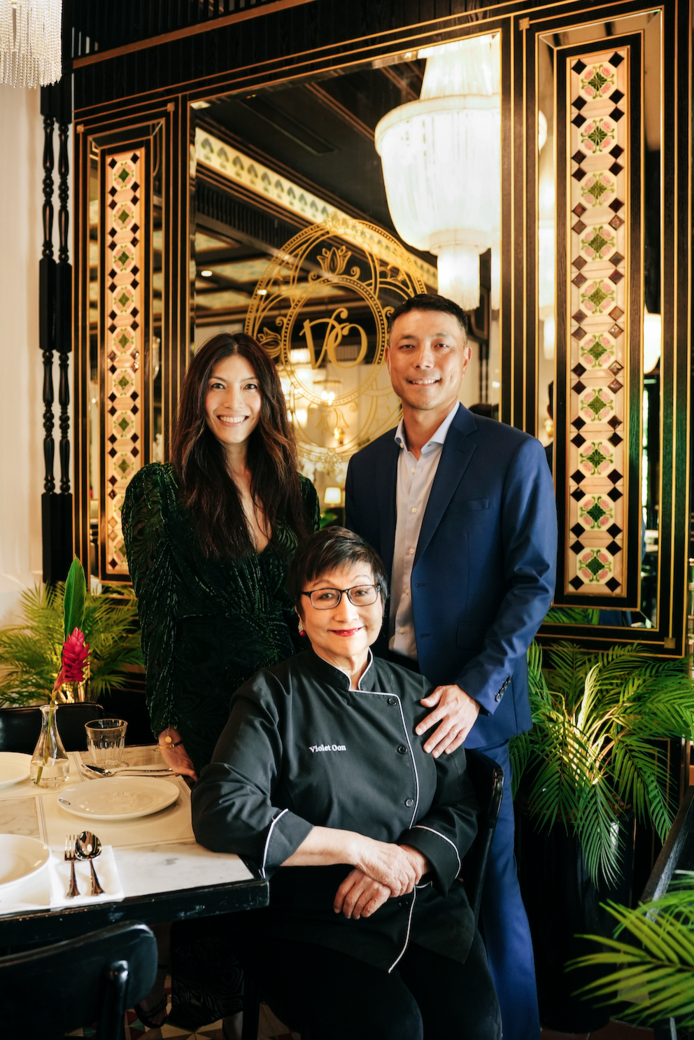
"We’re not just building a brand, but preserving her legacy and safeguarding our food culture for generations to come, and that sense of purpose guides how I approach leading and supporting the team."
Working closely with your mother places mentorship in a very real, lived context. What have you learned from her about leadership and conviction, and what have you had to define on your own?
Growing up, of course there were moments I found her irritating, as most children do. But working alongside my mother has been such a gift, because I get to see a side of her beyond just being my mum. As an adult and a colleague, I have a newfound respect for her.
What I’ve learnt from her is a deep commitment to craft and excellence, holding yourself to a high standard, and never asking of others what you won’t demand of yourself. She holds herself to those standards and approaches her work with immense discipline, and she expects the same of us. When that kind of dedication is lived out consistently, it becomes culture and sets the tone for the entire team.
In hospitality, we’re here to serve people well, and we also see ourselves as stewards of her legacy. That conviction is always at the forefront of how we uphold standards at scale, communicate clearly, and build teams who feel proud of the work and of what we are preserving and building together.
Can you share with us how you nurture confidence and creative ownership, especially among younger women?
I love seeing people lean into their strengths and truly excel. In my role, I try to identify where someone does their best work and put them in positions where they can thrive. I take time to understand how each person thinks, what energises them, and how they contribute most naturally, and I create space for that to come through more clearly.
I hold the team to high standards, and when people are operating from their areas of strength, I often see them produce their best work and find real joy in doing so. For me, it’s about helping them grow into those standards with confidence, clarity, and a real sense of ownership. From that place, I also learn so much from them as they grow into experts in their areas and contribute far more meaningfully to the work.
Looking ahead, what responsibility do you feel in shaping the future of Singapore’s food and cultural landscape, beyond the brand itself?
I wouldn’t say I see it as shaping the landscape in a big or declarative way. For me, it’s more about contributing thoughtfully and doing our part well. If we can show that heritage cuisine can continue to thrive and remain meaningful in today’s context, that in itself adds something valuable to the wider conversation.
I feel a responsibility to steward my mum’s work. That means protecting the integrity of the food, being thoughtful about how we present our culture, and creating spaces that are elegant and warm. If what we build encourages others to look more closely at their own traditions, or to value the depth of Singapore’s food culture, then that’s something I’m grateful to be part of.








 Back
Back