



Serial entrepreneur Benny Ong, 39, knows this scenario all too well. “That’s not how the hospitality industry has been thinking anymore,” he laments. Instead, “they’re thinking from a product standpoint – ‘Oh, I want the hotel to look like this’.”
That’s why, when Ong ventured into the hospitality realm in 2023, he was determined to take a different route. Ong, together with partners Tony Do and Shawn Lee, are the masterminds behind KiN Hotel Group, the fastest-growing boutique hotel business in Ho Chi Minh City (HCMC), Vietnam.
In the span of three years, the Group has amassed more than 14 properties and 1,200 rooms to its name – mainly in HCMC’s prime central neighbourhood of District 1, home to the CBD, key tourist attractions, and a buzzing shopping/dining/nightlife scene.
How have they scaled so quickly, especially in a city bent on constructing a Manhattan-esque skyline? Well, the Group is betting on the opposite direction: Repurposing shophouses and older, low-rise buildings instead of building shiny new highrises from scratch.
PROFILE
How Benny Ong is Investing in the Next Generation of Hotels
Photography by Marcus Lim, assisted by Chow Hui Xian
Grooming by Zhou Aiyi using Burberry Beauty and Oribe
02 Apr 2026
At KiN Hotel Group, Benny Ong is turning overlooked buildings in Ho Chi Minh City, Vietnam, into unique boutique stays. It’s a bet on how people will travel in the future – not how hotels worked in the past.

Imagine yourself to be a hotelier conceptualising a new project. In theory, the ideation stage should be simple: Start with the user journey, then build everything around it. But in practice, that instinct has gotten buried under layers of industry convention.
- OUTSIDER’S PERSPECTIVE
- VIETNAM, THE CALCULATED BET
- WHERE THE REAL INVESTMENT LIES
Outsider’s Perspective
The most surprising part? None of the founders have a hospitality background. They hail from the worlds of tech, marketing, and real estate instead.
That, ironically, has given them the perfect advantage.
“We don’t have the mindset of an operator,” Ong explains. “We come from a pure consumer standpoint.” As someone who clocks around 100 flights a year, Ong has spent enough nights in hotels to know what travellers actually appreciate, and what they don’t. “We start from what we want as consumers, and the price point we’re willing to pay.”
That outsider lens shapes how KiN Hotel Group is structured behind the scenes as well. Rather than replicating the traditional hospitality playbook, Ong and his partners imported systems from their previous ventures. “We don’t build departments the way the industry traditionally does,” he shares.
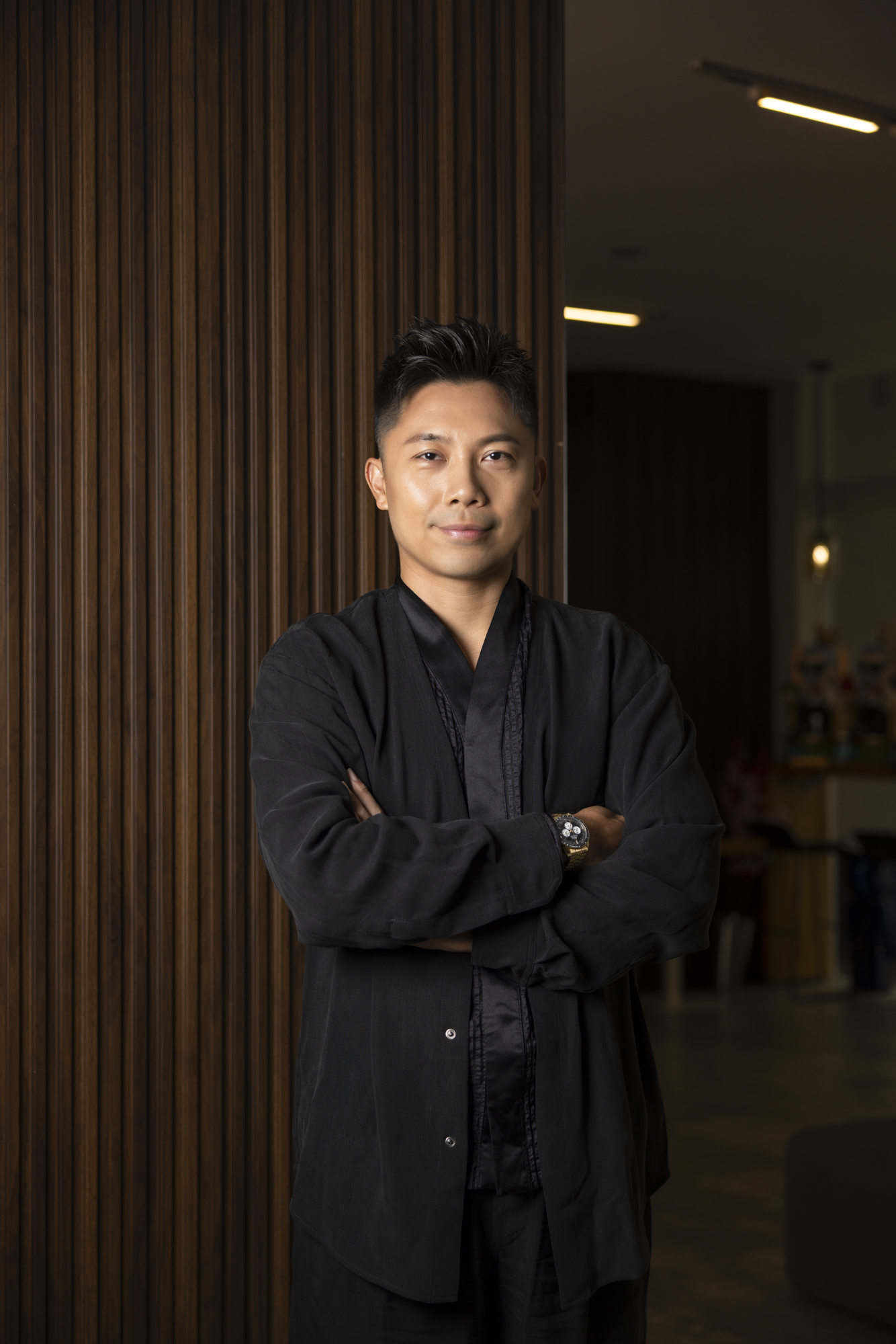 Outfit by Giorgio Armani, watch by Omega – Speedmaster Moonwatch Professional
Take marketing and sales, for instance. At KiN, those functions have been merged into a single revenue department, where teams share the same key performance indicators (KPIs). “Marketing drives higher daily rates, sales drives occupancy. When you combine them and give them the same KPIs, the synergy becomes much stronger.”
The same willingness to question convention extends to the way KiN thinks about the product itself. The familiar hierarchy of three-, four- and five-star hotels, Ong argues, can sometimes obscure what travellers actually value.
“Do we really need a grand lobby?” he asks rhetorically. “Do we need to follow a checklist of amenities just because a hotel is labelled four-star or five-star?” Instead, KiN dispenses with rigid star categories and focuses on how guests experience a stay.
A property in HCMC’s Japanese quarter – KiN Hotel Thai Van Lung – for example, isn’t styled as a Japanese-themed hotel, but it does include features that Japanese travellers value, such as bathtubs.
Elsewhere, location shapes the experience. A property beside a park – KiN Hotel Central Park – naturally attracts a more active crowd. That insight informed decisions to install a full gym, sauna, and steam room, with the possibility of adding ice baths as well. “We know people staying there will want to go for a morning jog,” Ong says. “So we designed the facilities around that lifestyle.”
(Related: Dr Jade Kua's shift in command)
- OUTSIDER’S PERSPECTIVE
- VIETNAM, THE CALCULATED BET
- WHERE THE REAL INVESTMENT LIES
Vietnam, the Calculated Bet
For Ong, the decision to build a hospitality business specifically in Vietnam was strategic. Tourism in HCMC, he notes, has been expanding exponentially, with a 30 to 40 per cent increase in traveller numbers post-COVID. “That’s a huge surge in demand.”
The majority of KiN’s guests are Vietnamese, many of them regular business travellers. The rest skew heavily Asian, with visitors from Singapore, Malaysia, Korea, Japan, and China.
But numbers alone weren’t the deciding factor. Ong and his partners were already familiar with the Vietnamese market through their other ventures. That familiarity, and a trusted local partner, made the move feel less like a leap and more like a natural extension.
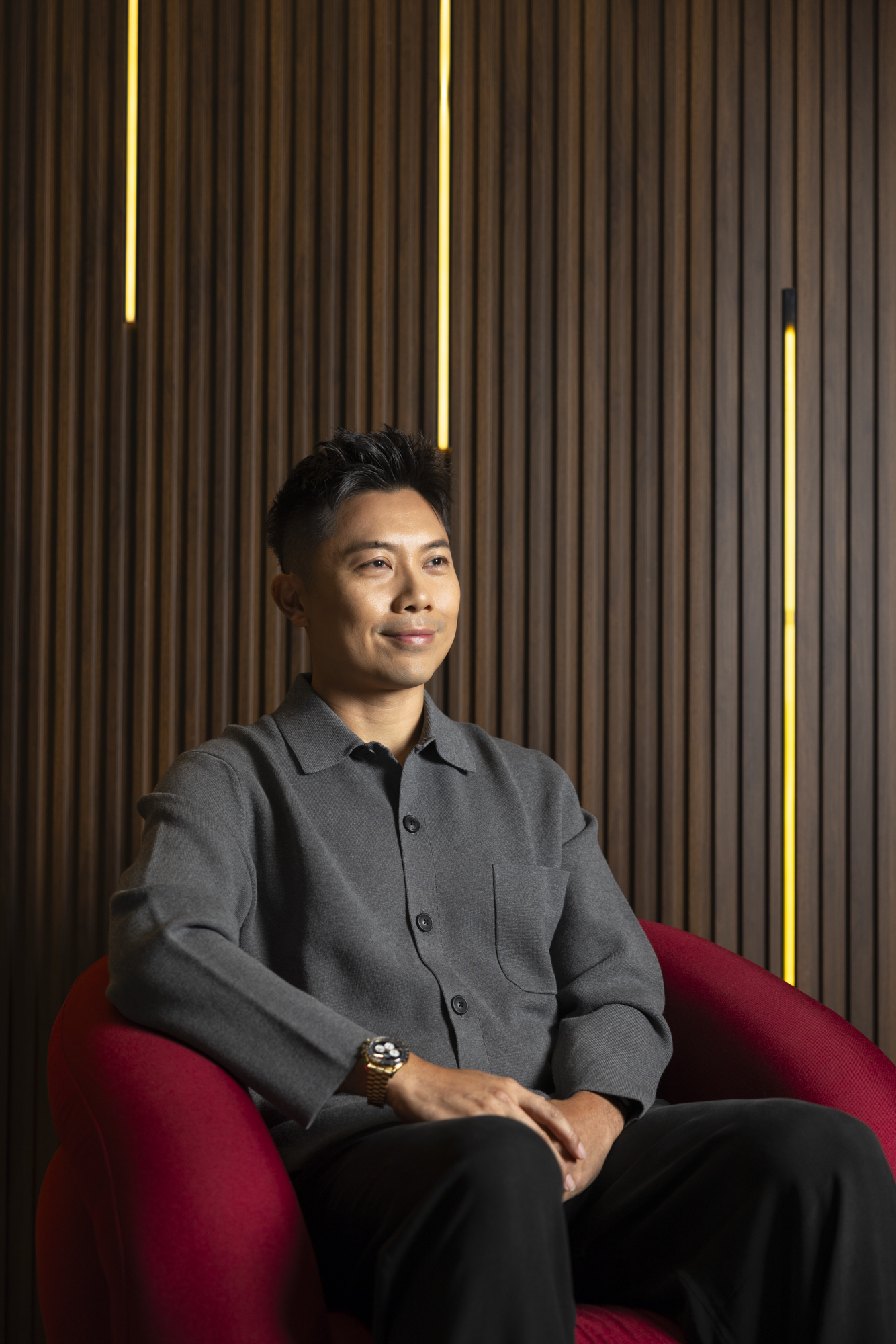

Each of their projects begin with a careful, often manual search for existing structures that can be repurposed. “The selection process is very hands-on,” Ong says. “We look at the architecture, the structure, the existing layout. Because we don’t tear down the building, the shell matters.”
Once acquired, the building itself often dictates the design direction. Instead of imposing a standard template across properties, KiN works with the existing structure to determine what the hotel ultimately becomes.
Adaptive reuse, Ong says, is frequently framed as an environmental gesture. In reality, it begins with something more pragmatic. “People assume it’s just about sustainability,” he says. “But it has to make financial sense. The more things you can refurbish and reuse, the lower your investment cost.”
- OUTSIDER’S PERSPECTIVE
- VIETNAM, THE CALCULATED BET
- WHERE THE REAL INVESTMENT LIES
Where the Real Investment Lies
For someone building a rapidly expanding hotel portfolio, Ong’s idea of investing for the future has surprisingly little to do with balance sheets.
“To invest in the future,” he reflects, “you first have to invest in yourself.”
For Ong, that means maintaining both a clear mental state and a physically capable body. “If your headspace is protected and you have an able body, you operate differently. You sleep well. You respond better to people, including your kids,” he says.
This year, Ong plans to compete in four HYROX races as part of a personal goal to reach peak fitness before his 40th birthday in September. “My goal is to be fitter than my 23-year-old self by the time I get there.” Training happens wherever his schedule allows, often in hotel gyms around the world as he travels.
At home, Ong is a father to a seven-year-old daughter and a three-year-old son. Fatherhood, he says, was always part of the bigger plan. “My life goal when I was young was actually to be a dad,” he admits. “More than being an entrepreneur.”
Balancing that with the realities of building businesses across borders is, inevitably, a work in progress. The key, he says, is helping his children understand that ambition doesn’t have to come at the expense of family.
“They need to know that it’s okay to pursue something you’re passionate about,” he says. “The narrative shouldn’t be that work takes you away from life. It’s that you’re building something you really believe in.”



 Back
Back