



Artbox remains the key event in Teo’s portfolio. The seventh and most recent edition, themed Artbox Camp, wrapped up a two-weekend run at Singapore Expo in April. Its performance pleased him.
“I think Artbox this year managed to gain tremendous traction and really rally the community,” says Teo, the Founder and CEO of Invade. “In fact, it surpassed the statistics from the past two years, in terms of revenue, visitorship, and even the message we wanted to bring across.”
What started as a Bangkok-style pop-up market in 2017 has now evolved into a highly anticipated yearly affair, with some 54,000 visitors attending the 2026 edition. Teo shares that top-line revenue is in the range of S$1.5 million to S$2 million, but is quick to point out that large-scale creative festivals are rarely easy money.
PROFILE
Meet Kent Teo – the Unassuming Architect Behind Singapore's Favourite Creative Events
Photography by Marcus Lim, assisted by Mcdouglas Lim
Styling by CK Koo, assisted by Haz
Grooming by Zhou Aiyi using Clarins and Oribe
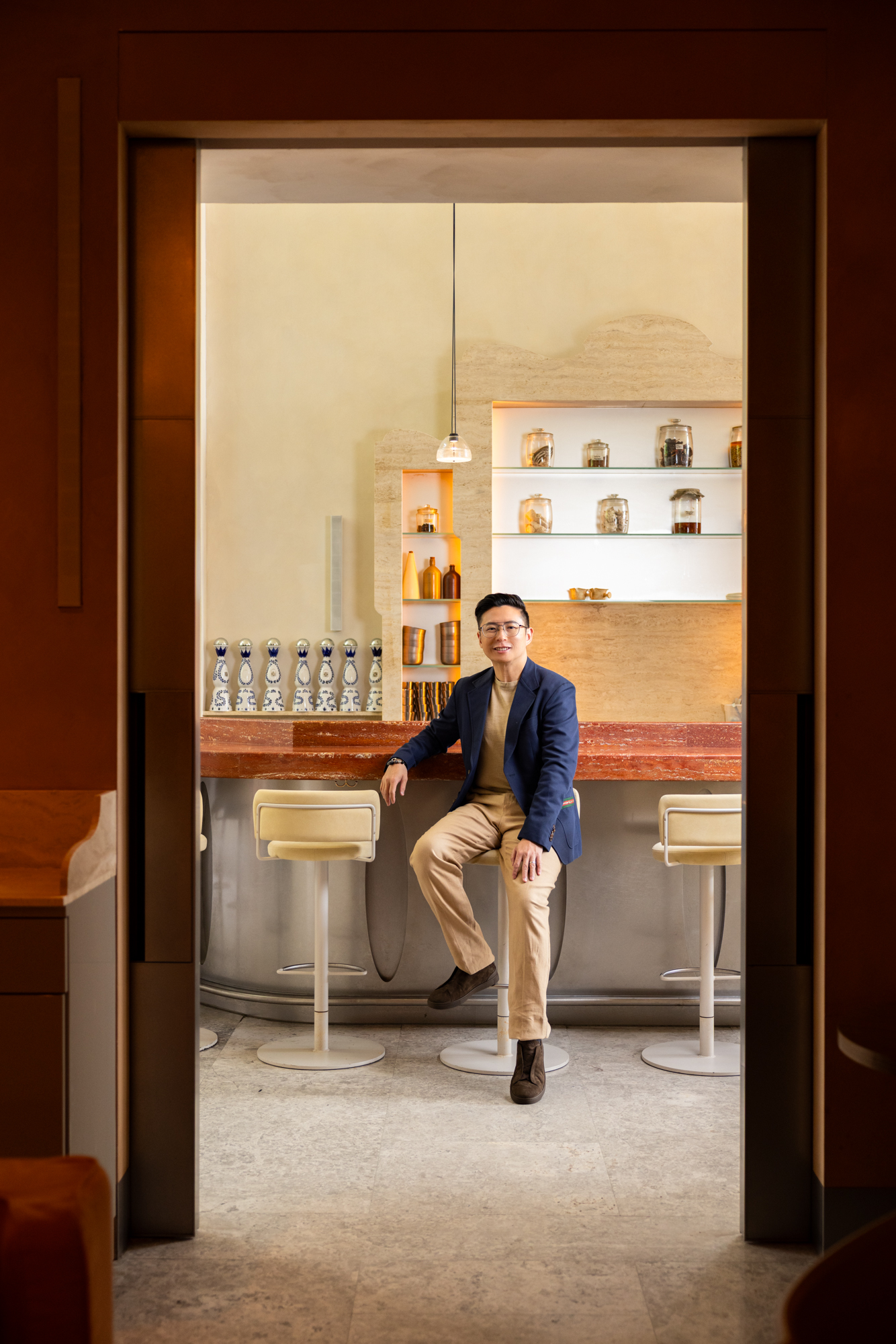
Shot on location at Bar Somma
04 Jun 2026
As the founder of Invade, Kent Teo has spent the last 16 years reshaping Singapore’s experiential landscape and becoming one of the city’s foremost community builders.

We meet Kent Teo fresh from the latest round of Artbox Singapore, the country’s largest annual creative festival. He looks surprisingly well-rested for someone who runs a full calendar of events, festivals, and other placemaking activities every year for the past three years.
“Events like Artbox are expensive – it typically costs around S$1 million just to build out,” Teo says. “Historically, we’ve either broken even or even taken losses. But we know we have to do it. Artbox is our baby.”
That distinction is important to him. “When we work on projects for other stakeholders, naturally there are different agendas and objectives involved,” he explains. “But with Artbox, it’s where we can truly express ourselves creatively.”
His team of 35 full-timers also enjoys working on the festival, because they are free to design as they wish. “Nobody is saying, ‘You can’t do this’ or ‘You can’t do that,’” he adds. “As long as we’re aligned on the message we want to bring across, we push the boundaries together.”
(Related: How Benny Ong is investing in the next generation of hotels)
- BUILDING CULTURE
- HUMBLE BEGINNINGS
- LEARNING HOW TO FAIL
- THE COST OF AMBITION
- A MORE PURPOSEFUL FUTURE
Building Culture
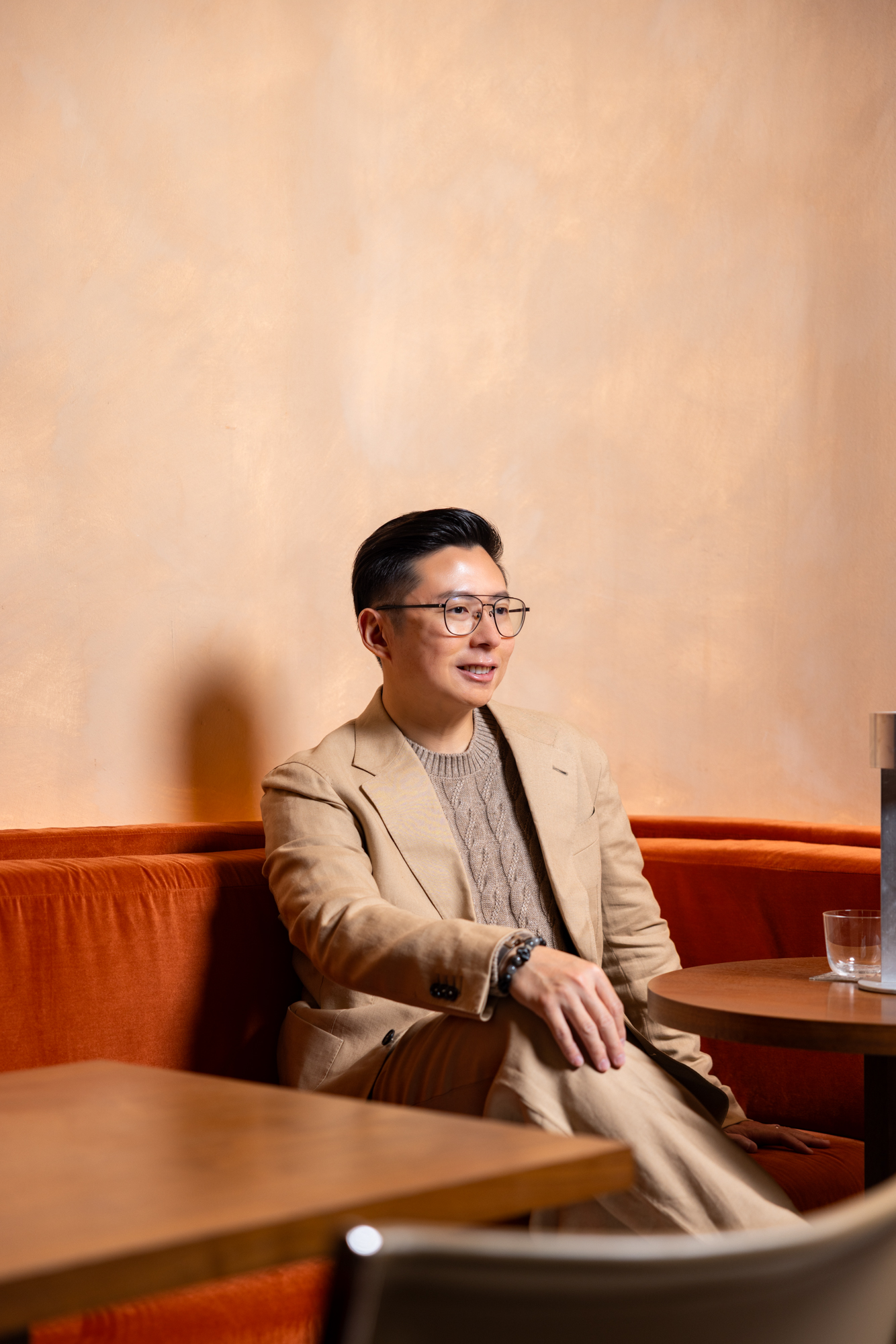 Outfit by ZEGNA
Teo is one of those founders who has quietly, but significantly shaped Singapore’s experiential and creative landscape over the past decade. In fact, his congenial personality and approachable nature almost belies his cultural gravitas.
His fingerprints are everywhere. Invade’s latest venture? Weekend Brew Club, a roving sober party/coffee buffet festival held mainly in residential neighbourhoods. Recent locations include Keat Hong, Tampines West, Toa Payoh Lorong 7, and Bras Bash Complex. The idea, he says, is to add vibrancy and develop merchant capabilities in HDB estates.
And then there are national level events – such as the Singapore Retail Festival, organised in conjunction with the SRA (Singapore Retailers Association) – and an as-yet-unnamed headline event during the Grand Prix Singapore Season, a joint effort with the STB (Singapore Tourism Board).
Ever since Invade’s founding in 2010, the company has put together more than 3,000 events, working with over 40,000 emerging brands and building a network spanning some 200 landlords and partners.
For countless independent labels, homegrown F&B businesses, and small creators, Invade became an entry point into visibility.
- BUILDING CULTURE
- HUMBLE BEGINNINGS
- LEARNING HOW TO FAIL
- THE COST OF AMBITION
- A MORE PURPOSEFUL FUTURE
Humble Beginnings
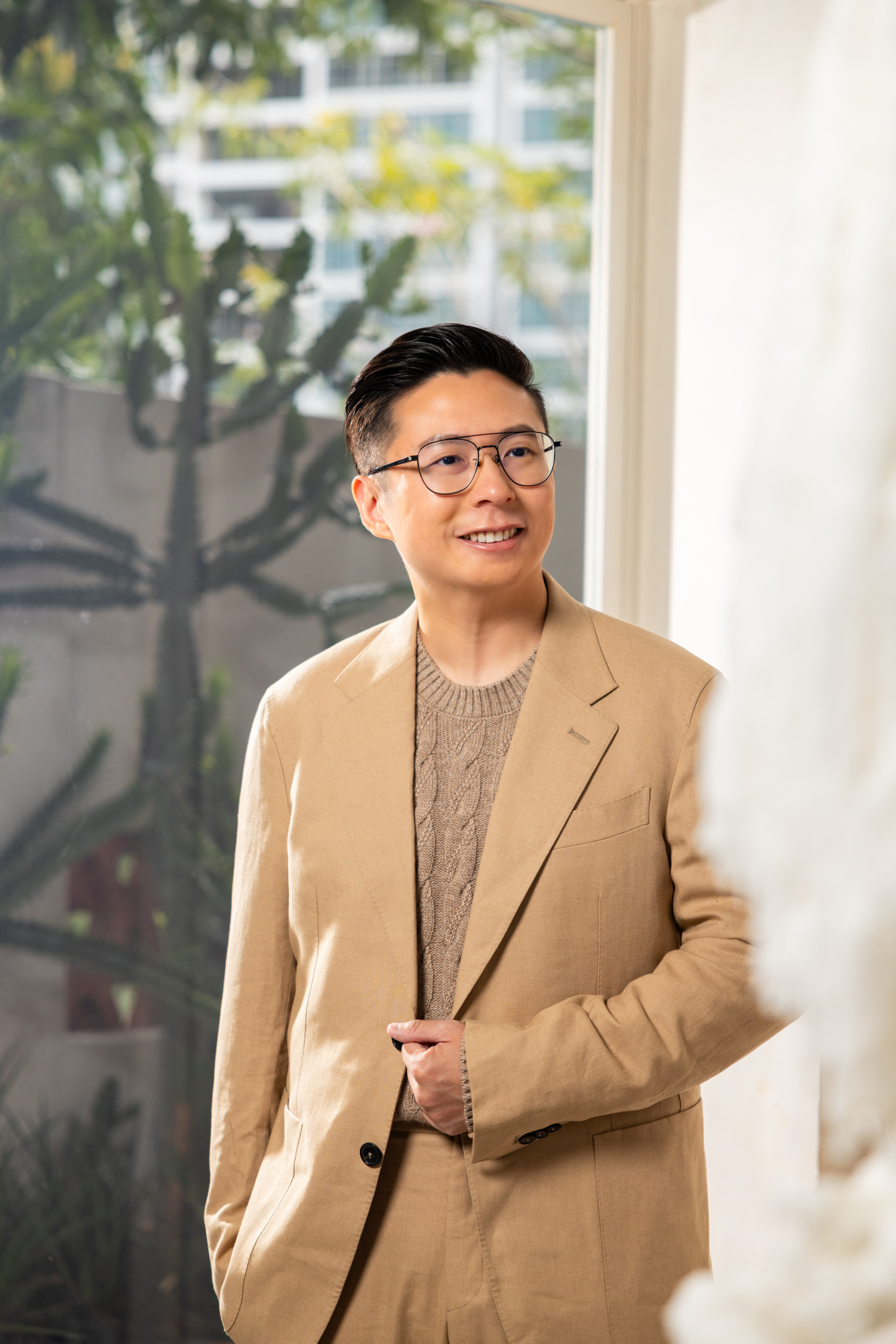 Outfit by ZEGNA
Teo never imagined any of this would happen. Back in his university days, he and his then-girlfriend – now wife and Invade COO – were simply trying to fund their next holiday. “She loved visiting flea markets, renting little booths and selling clothes,” he recalls. “We were really just trying to earn enough money for our next trip to Bangkok.”
Soon, they began bringing back vintage clothing from Thailand to resell. Teo also started making handmade accessories, such as Scrabble letter rings and guitar-pick rings. “That’s when I realised I really enjoyed the idea of curation,” he says. “I liked that people were buying things I had picked, curated, or made myself.”
Eventually, the pair had a bigger idea: Instead of renting booths at flea markets, why not organise the entire shebang themselves? And so they did. “For about three to four years, we were doing around 52 weekends a year, with each market hosting roughly 120 stalls.”
Over time, they noticed their vendors evolving too. They were no longer just selling second-hand clothes; they had started making their own products and brands. That was what inspired the couple to create Makers’ Market.
- BUILDING CULTURE
- HUMBLE BEGINNINGS
- LEARNING HOW TO FAIL
- THE COST OF AMBITION
- A MORE PURPOSEFUL FUTURE
Learning How to Fail
Ask Teo for the secret behind successful events, and his answer is refreshingly candid. “Honestly, I don’t think I have a perfect formula for success,” he says. “I still don’t fully know what it takes to create a successful event every single time.”
What he does know, however, is how to fail less. “There are certain mechanics, timelines, resources and operational disciplines we’ve learned over the years that help shape an event into something more likely to succeed,” he says.
At the same time, he acknowledges that they will continue to fail – “And that’s okay. We just become more polished by embracing those failures.”
That mindset was crucial during COVID-19, when live events came to a near standstill overnight. The pandemic led Invade to face a 95 per cent drop in revenue. At the time, the company had more than 40 full-time staff. Teo decided not to let anyone go.
“Giving up was never an option.” Instead, the company pivoted repeatedly, experimenting with COVID-friendly experiential markets and ticketed experiences, rethinking retail spaces at a time when malls, landlords, and brands were all scrambling to stay relevant. Those pivots helped them survive.

- BUILDING CULTURE
- HUMBLE BEGINNINGS
- LEARNING HOW TO FAIL
- THE COST OF AMBITION
- A MORE PURPOSEFUL FUTURE
The Cost of Ambition
Success, however, came with consequences. A self-professed workaholic, Teo admits he spent years running on unhealthy levels of adrenaline and overwork.
“I had a health scare a few years ago, which became a wake-up call for me,” he says. “My doctor basically told me it stemmed from an unhealthy lifestyle – constantly burning the midnight oil, working extremely long hours, and never really stopping.”
His wife eventually intervened. “She would tell me, ‘I don’t think this is healthy. Let’s travel.’” Ironically, travel ended up becoming another source of inspiration. Teo now visits museums, markets, festivals, and conferences overseas, studying how different cities build culture and community.
“I recently went to Texas and visited South by Southwest,” he says. “There was so much to learn from it.” These days, he is more intentional about health and exercise, though he admits switching off remains difficult. “It’s a problem.”
- BUILDING CULTURE
- HUMBLE BEGINNINGS
- LEARNING HOW TO FAIL
- THE COST OF AMBITION
- A MORE PURPOSEFUL FUTURE
A More Purposeful Future
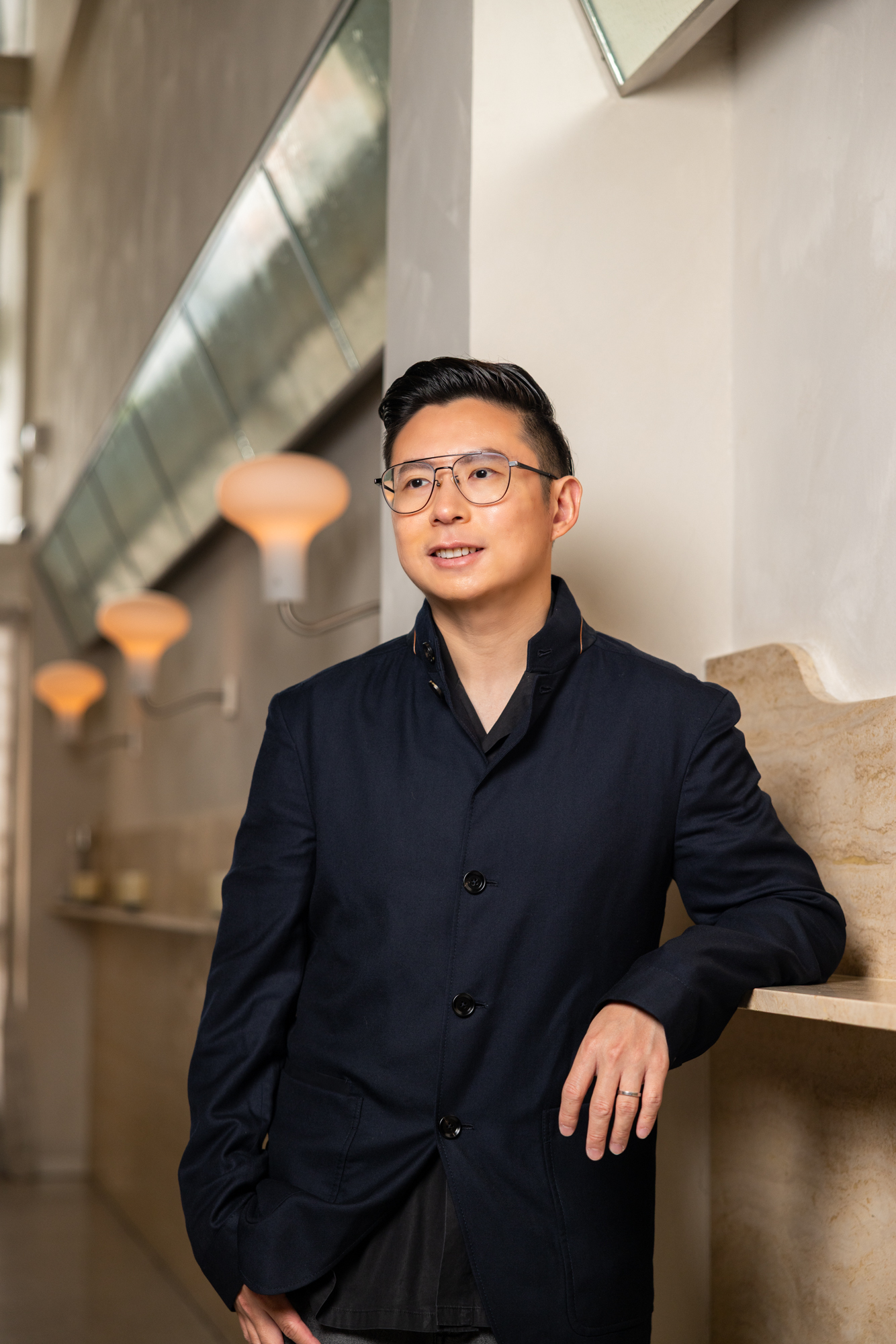 Jacket by ZEGNA
“In the past, success was about growth at all costs,” Teo says. “Bigger numbers, more expansion, more revenue, more markets. Honestly, it was also about chasing money.”
But somewhere along the way, he admits to having lost himself a little. Post-pandemic, Invade began looking inward instead of outward. “Today, success is much more purpose-driven,” he says.
That shift is reflected in the company’s recent pledge of S$200,000 worth of corporate resources annually to support social causes. “The reason we made the pledge is simple: We genuinely believe in it,” says Teo. “This wasn’t something we suddenly decided to do for optics or corporate branding.”
Instead, he sees it as an extension of Invade’s larger role within Singapore’s creative ecosystem. “In the past, we saw ourselves simply as a bridge between brands and audiences,” he says.
“But now, we see ourselves as an access point into a larger ecosystem of creators, entrepreneurs, and communities. If people want access to our ecosystem, then let’s co-create something meaningful together.”



 Back
Back