



The world we live in celebrates overnight success. Yet most forms of excellence – whether in sport, business, science, or the arts – take time to develop. There are no shortcuts to success. Behind every breakthrough or milestone lies years of (mostly) unseen effort.
Think of Japan’s sushi masters, who typically take more than 10 years to hone their craft. Ditto Switzerland’s master watchmakers. The same can be said of elite sports like golfing, gymnastics, or swimming. The sportsmen – and their accomplishments – we admire most are often the result of long-term commitment rather than sudden triumph.
PROFILE
Shannon Tan and EFG International on Why Great Talent Needs Long-Term Believers
By Aaron De Silva
Photography by Marcus Lim, assisted by McDouglas Lim
Grooming by Nathaniel Ismail using La Mer, Laura Mercier, Alha Alfa Cosmetics, Anastasia Beverly Hills Cosmetics, Schwarzkopf Professional
Shot on location at Mandarin Oriental, Singapore
06 Jul 2026
Photography by Marcus Lim, assisted by McDouglas Lim
Grooming by Nathaniel Ismail using La Mer, Laura Mercier, Alha Alfa Cosmetics, Anastasia Beverly Hills Cosmetics, Schwarzkopf Professional
Shot on location at Mandarin Oriental, Singapore
06 Jul 2026
The world's greatest athletes, artists and entrepreneurs rarely succeed alone. Singaporean golfer Shannon Tan’s journey with EFG International offers a powerful lesson in the value of backing potential before it becomes obvious.

Blame it on TikTok/Douyin, our penchant for doomscrolling, and same-day deliveries (30 to 60 minutes, if you live in China). Collectively, humanity’s attention spans have never been shorter, nor has our craving for immediate gratification ever been stronger.
But talent rarely develops in isolation. And it doesn’t just require individual effort, but also the support of people – and sometimes, institutions – willing to invest in potential long before success is guaranteed. After all, if it takes a village to raise a child, surely it’ll take all of society to nurture a champion?
In Renaissance Europe, influential families like the Medici understood this well. Patronage was more than just about funding artists to paint family portraits or architects to build palaces. It was a vote of confidence in talent whose eventual impact could not yet be measured. Centuries later, the subjects may have changed, but the principle remains strikingly similar.
- PAR FOR THE COURSE
- IDENTIFYING OPPORTUNITY BEFORE IT BECOMES OBVIOUS
- THE CASE FOR PLAYING THE LONG GAME
Par for the Course
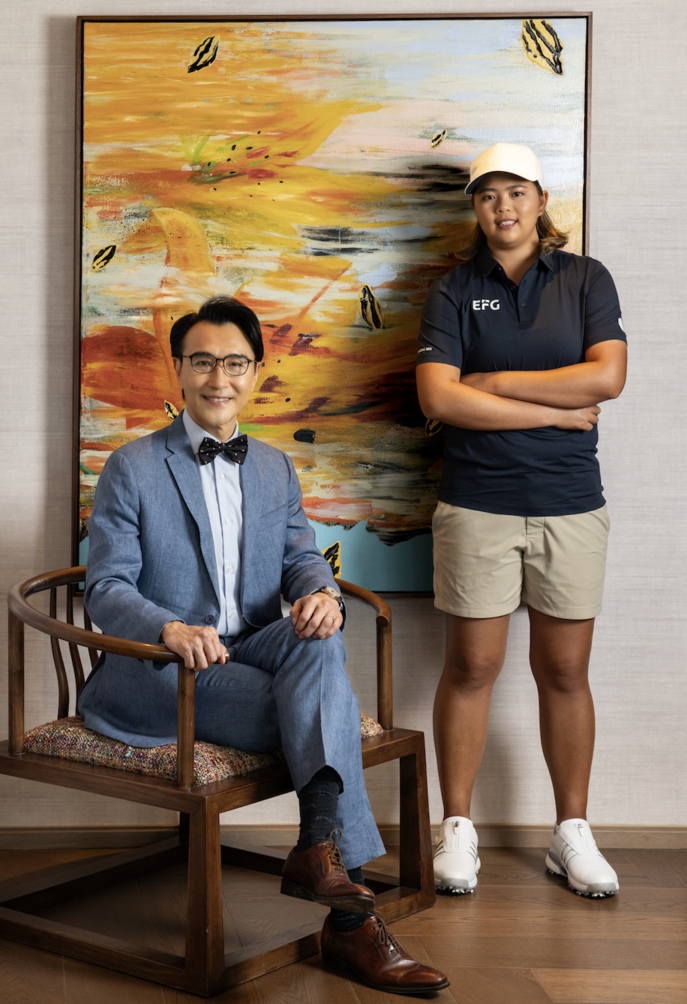
It’s a philosophy that underscores the partnership between EFG International and Singaporean golfer Shannon Tan. The latter, Singapore’s first Olympian golfer and a three-time Ladies European Tour winner, has become one of the country’s most recognisable sporting figures.
But her wins are also a reminder that exceptional achievement is rarely the work of a single individual. To have the backing of a financial institution like EFG, which embraces notions of legacy and long-term impact, “means a lot”, says Tan.
“When you are building a career in professional golf or sports in general, you face so many moments of uncertainty – there are good weeks, difficult weeks, and everything in between.”
Those moments were especially apparent during her first year as a professional, when she was navigating the physical and mental demands of an intense competition and travel schedule. Having institutional backing, she says, made a meaningful difference.
“Having a partner like EFG that believes in me and the bigger picture gives me a lot of confidence. That kind of trust changes how you carry yourself as an athlete, and you feel supported rather than just sponsored.”
That distinction is important; it separates patronage from sponsorship. A sponsor buys visibility. But a patron invests in possibility. The next time you’re in Italy, thank the Medici’s patronage for giving us masterpieces by Botticelli, Leonardo da Vinci, and Michelangelo.
(Related: Kent Teo – the unassuming architect behind Singapore's favourite creative events)
- PAR FOR THE COURSE
- IDENTIFYING OPPORTUNITY BEFORE IT BECOMES OBVIOUS
- THE CASE FOR PLAYING THE LONG GAME
Identifying Opportunity Before it Becomes Obvious
For Albert Chiu, Head of Asia Pacific Region at EFG, supporting athletes is not merely a marketing exercise, but an extension of the firm's broader philosophy.
“We have always believed that our role extends beyond managing wealth,” he says. “We are in the business of backing potential – whether that means a family building their legacy over generations, or a young athlete trying to make it on the world stage.”
The comparison may seem surprising at first, but Chiu sees clear parallels between advising families on long-term wealth creation and the bank’s support for elite athletes. Besides Tan, the bank is also partnered with the Singapore Golf Association and the EFG Young Athletes Foundation in Hong Kong, which was established in 2009.
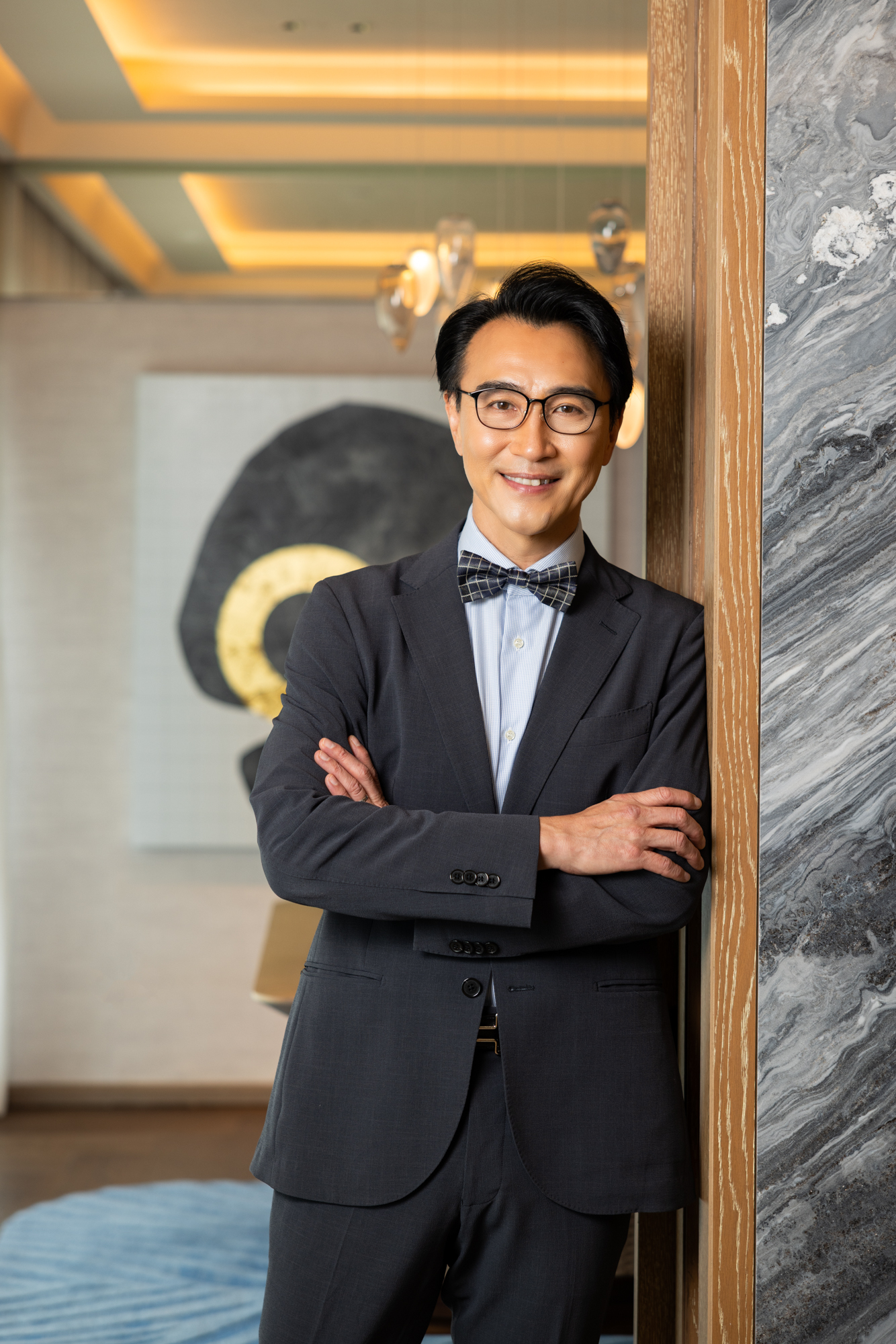

“In both cases, you are dealing with long time horizons, considerable uncertainty, and the need for deep trust,” he explains. “A family building multi-generational wealth needs a partner who will stay the course through volatility. An athlete needs exactly the same kind of steady, committed support.”
Crucially, neither journey can be measured solely by short-term results. With Tan, EFG chose to support her because it believed in her potential rather than waiting until international success was already assured.
Chiu describes this as an entrepreneurial mindset: Identifying opportunity before it becomes obvious. “Precisely because Singapore is not yet a golf powerhouse is why it is worth investing in now,” he says. “You back potential before it is obvious.”
- PAR FOR THE COURSE
- IDENTIFYING OPPORTUNITY BEFORE IT BECOMES OBVIOUS
- THE CASE FOR PLAYING THE LONG GAME
The Case for Playing the Long Game
That conviction has already yielded remarkable results. Tan became Singapore's first Olympic golfer in 2024 and has helped raise the profile of the sport locally. Yet, both athlete and patron view success through a broader lens – that of community influence.
“When you are the first Singaporean to qualify for the golf Olympics, and when you win on debut on the Ladies European Tour, you are not just achieving for yourself, but also rewriting what young Singaporeans believe is within reach,” says Chiu.
“Every junior golfer who watches Shannon's journey and thinks, ‘maybe I can do that too’, is part of the impact. That multiplier effect is what makes these investments meaningful far beyond the individual,” he adds.

For Tan, legacy is similarly measured – not by trophies, but by impact. “The titles and achievements are obviously very special, but when I think about legacy, I usually think about the impact on others,” she says.
“If my journey can inspire more young people to take up golf, pursue sport seriously, or simply believe in themselves a little more, that would mean a lot to me.”
Perhaps that is the enduring lesson of patronage, whether in Renaissance Europe or modern Singapore. The greatest returns are not always immediate, nor are they always financial; sometimes they are measured in possibilities created, barriers broken, and future generations inspired.
In a culture hopelessly obsessed with instant gratification, that may be the strongest argument yet for playing the long game.



 Back
Back